Midlife Blood Pressure Predicts Later Cardiovascular Risk
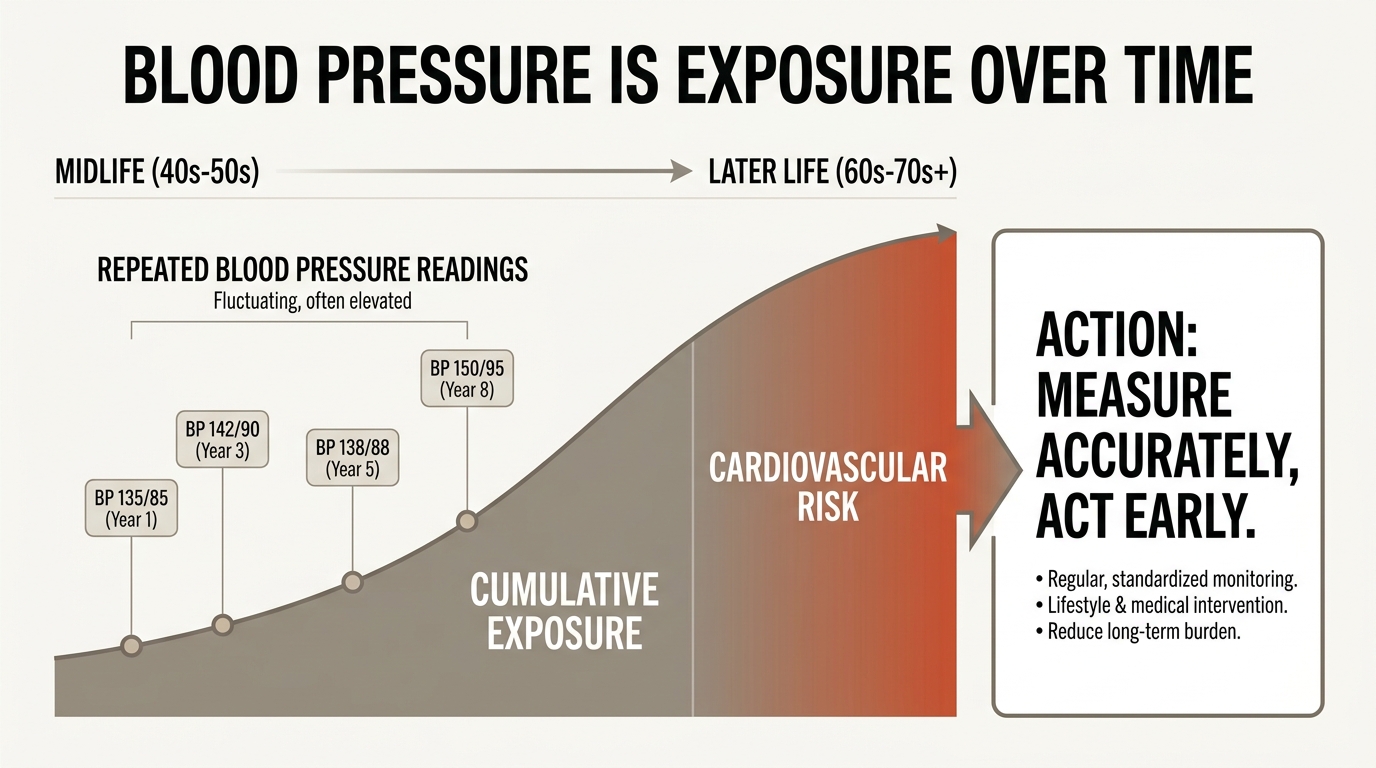
Blood pressure is not a single-visit grade. It is exposure over time. The useful question in midlife is whether readings are measured well enough, often enough, to change the trajectory before vascular disease becomes visible.
A long follow-up of the Harvard Alumni Health Study found that higher blood pressure in early adulthood was associated with later cardiovascular and coronary-heart-disease mortality, even after accounting for hypertension in middle age. This is observational evidence, not proof that one reading determines an individual future. It does establish why accumulated exposure deserves attention before symptoms arrive.
Why midlife is the decision window
Arteries, kidneys, and the heart respond to pressure over years. By the time chest pain, stroke, heart failure, or kidney impairment appears, the prevention window is narrower. That does not make risk inevitable. It makes measurement and treatment decisions earlier inputs into a later outcome.
The American Heart Association guideline classifies a blood pressure below 120/80 mm Hg as normal, while 130 or higher systolic or 80 or higher diastolic falls in the hypertension range. Diagnosis depends on repeat, properly obtained measurements and clinical context. A home cuff can improve the signal when it is validated, correctly sized, and used with a consistent protocol.
What action can change
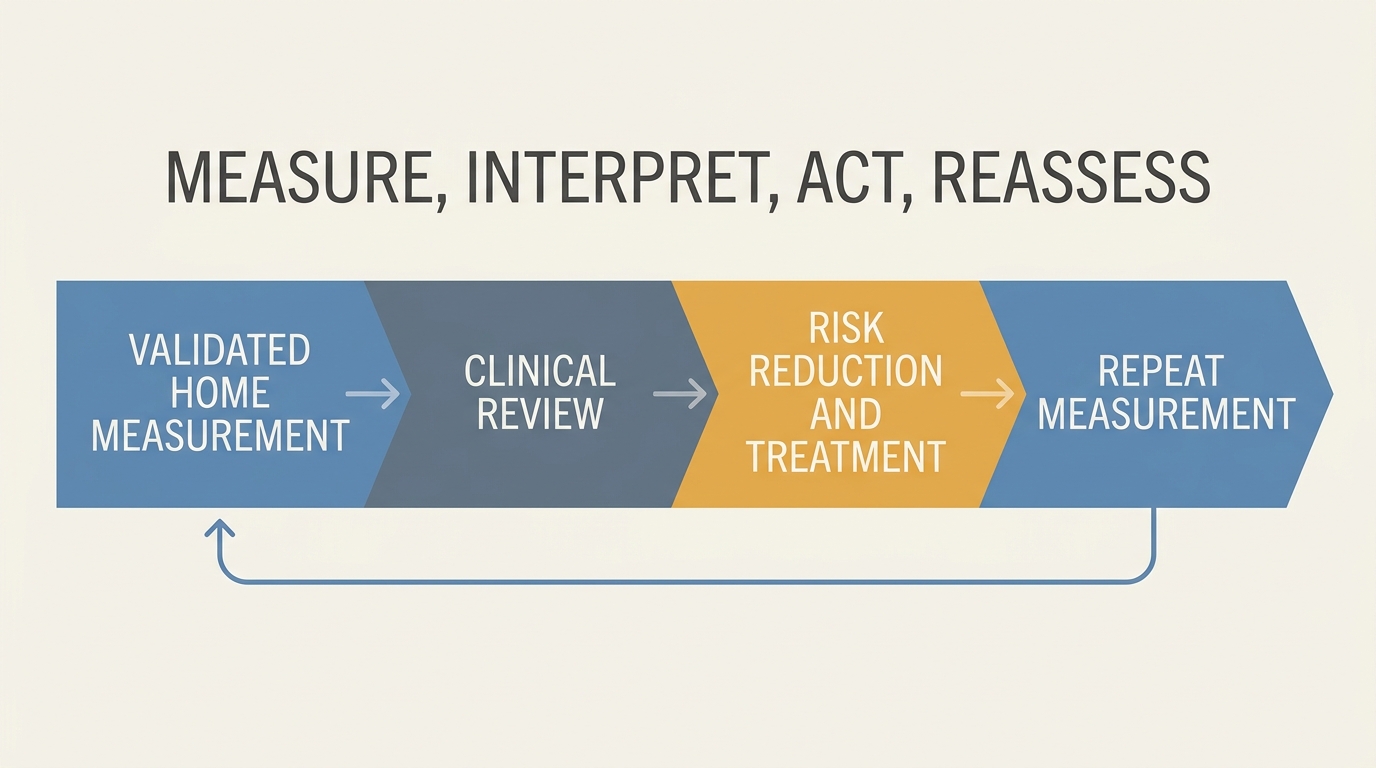
First, establish a credible baseline. Take several readings on separate days, seated and rested, and bring the log to a clinician when readings remain elevated. Second, identify contributors that are actionable: excess sodium, alcohol, inactivity, sleep apnea, medication effects, kidney disease, and weight where relevant. Third, use prescribed medication when it is indicated rather than treating lifestyle work as a reason to postpone effective care.
Home readings do not replace diagnosis. They reduce the chance that a rushed office visit becomes the entire record. They also make the response testable: if changes in training, sleep, alcohol, food, or treatment do not move a well-collected pattern, that fact belongs in the next clinical conversation.
Blood pressure is one of the few long-run risks you can measure this week and improve before it asks for an emergency response.
Use the free calculator for the wider baseline
LifeMeter's free longevity calculator does not diagnose hypertension. It helps place blood pressure beside smoking, activity, sleep, metabolic health, and other modifiable risks that shape the larger prevention baseline.
| Known | What follows |
|---|---|
| Higher blood pressure earlier in adulthood is associated with later cardiovascular mortality. | Midlife measurement is prevention work, not administrative work. |
| A diagnosis needs repeated, accurate readings. | Do not react to one number in isolation. |
| Blood pressure is modifiable. | Tracking should lead to a clinical and behavioral plan. |
Sources
American Heart Association: understanding blood pressure readings.