GLP-1 Beyond Type 2 Diabetes: Cardiorenal Signals, Safety Boundaries, and Off-Label Drift
GLP-1 evidence is broadening beyond classic type 2 diabetes pathways. Expansion without boundary discipline will create avoidable harm.
Recent cardiorenal analyses increased enthusiasm for wider GLP-1 deployment across risk contexts. The right response is not blanket expansion. The right response is boundary-aware expansion: identify where evidence strength is high, where it is moderate, and where uncertainty remains too large for routine adoption.
Core thesis: new GLP-1 cardiorenal signals justify targeted clinical expansion, but only under strict safety checkpoints and explicit off-label governance.
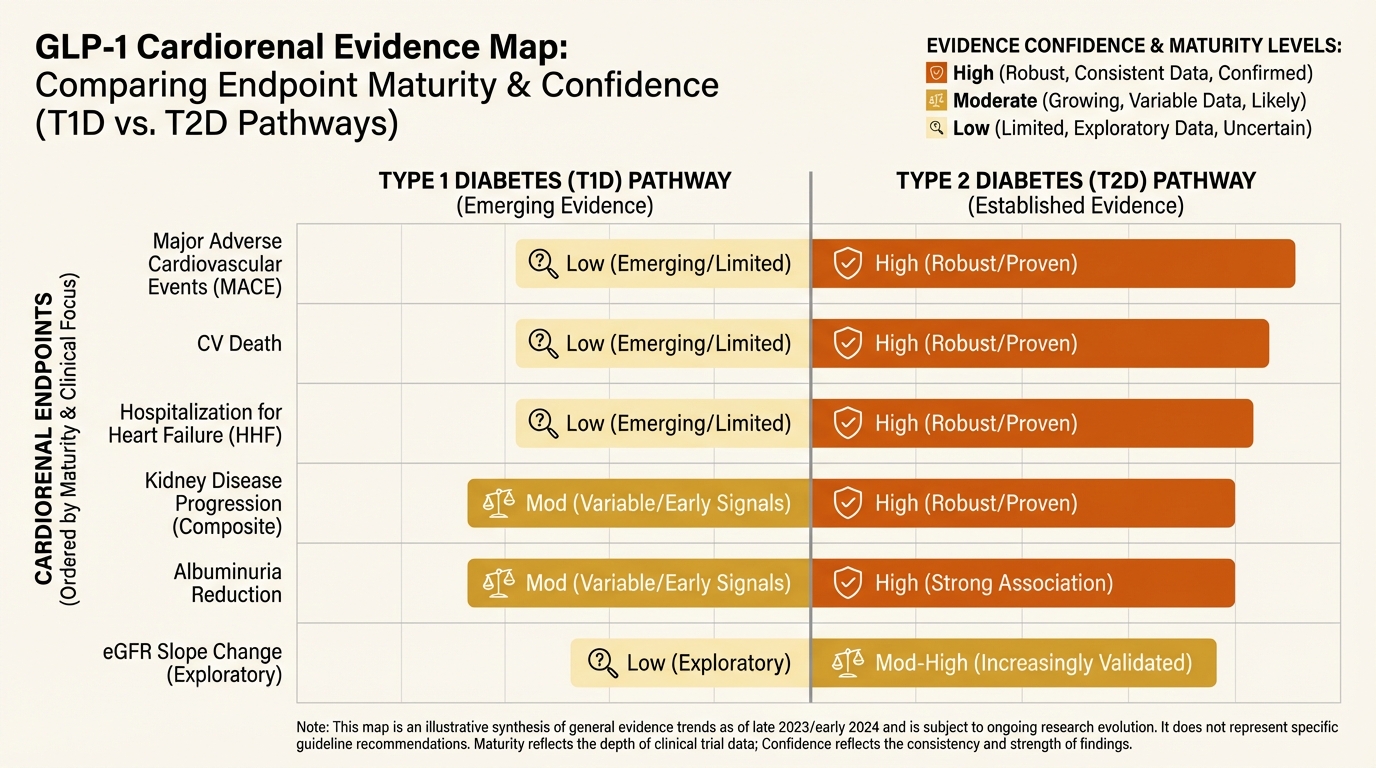
Evidence Scope Is Expanding
Type 2 diabetes remains the deepest evidence base. Newer analyses in adjacent cohorts create directional signal, including renal and cardiovascular event profiles. Directional signal is useful, but it is not equivalent to mature evidence maturity across all populations and endpoints.
Safety Boundaries
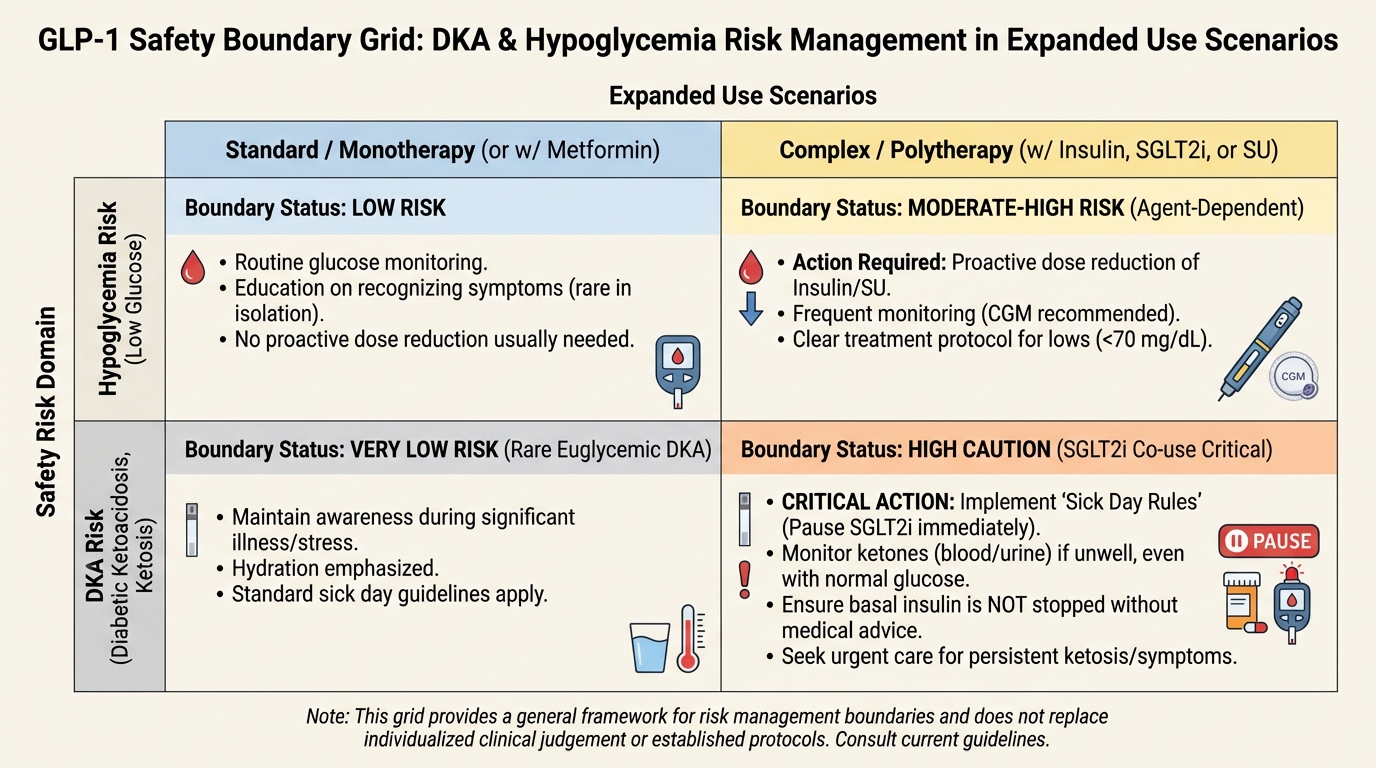
As indication boundaries stretch, safety surveillance needs to tighten. For high-risk groups, dehydration risk, gastrointestinal intolerance cascades, dose-escalation stress, and glycemic instability can overwhelm theoretical net benefit if protocols are weak. Boundary-aware use means explicit contraindication checks, early adverse-event detection, and predefined de-intensification triggers.
Off-Label Drift and Governance
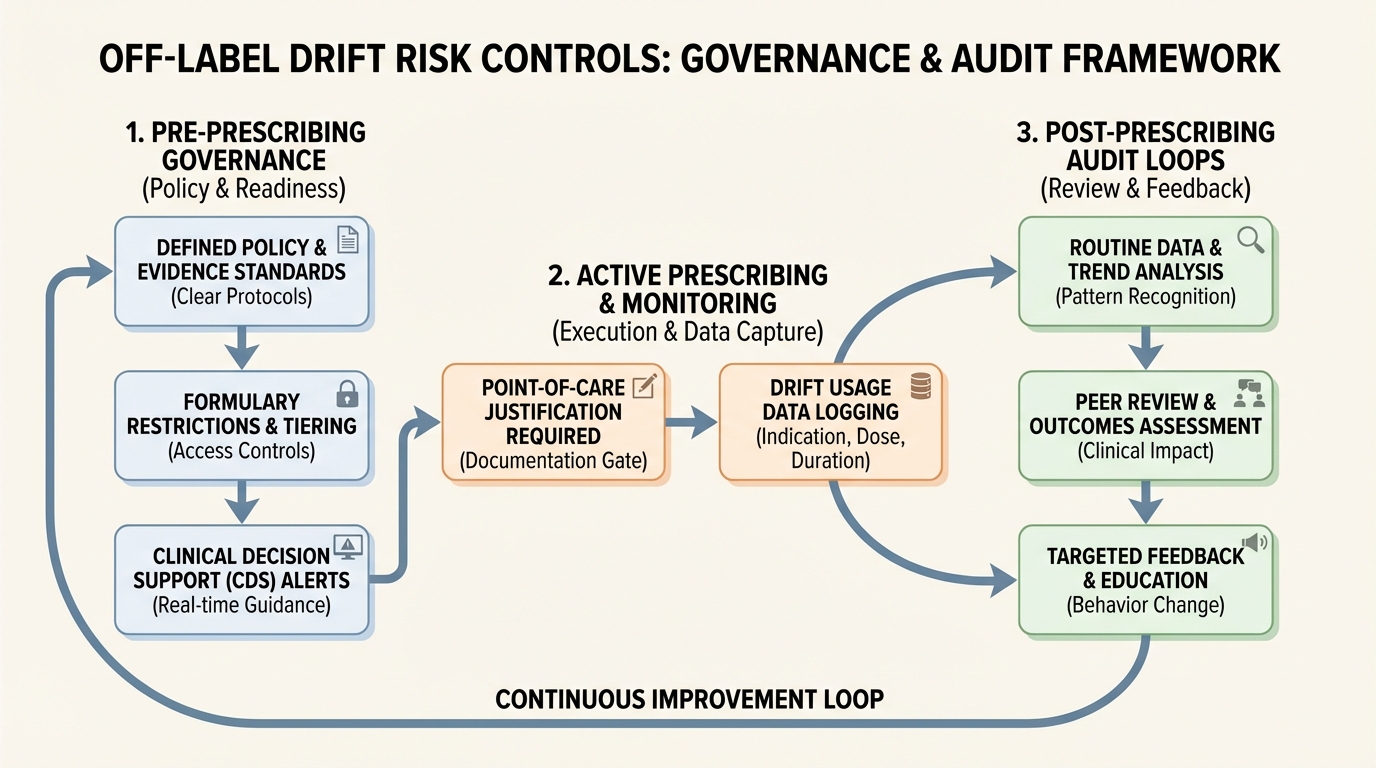
When attention rises quickly, prescribing behavior can drift faster than evidence quality. This is predictable. The control mechanism is local governance: indication registry, baseline-risk documentation, objective continuation criteria, and mandatory reassessment windows. Without governance, expansion becomes narrative-driven and variance in outcomes widens.
Decision Checkpoints for Clinical Teams
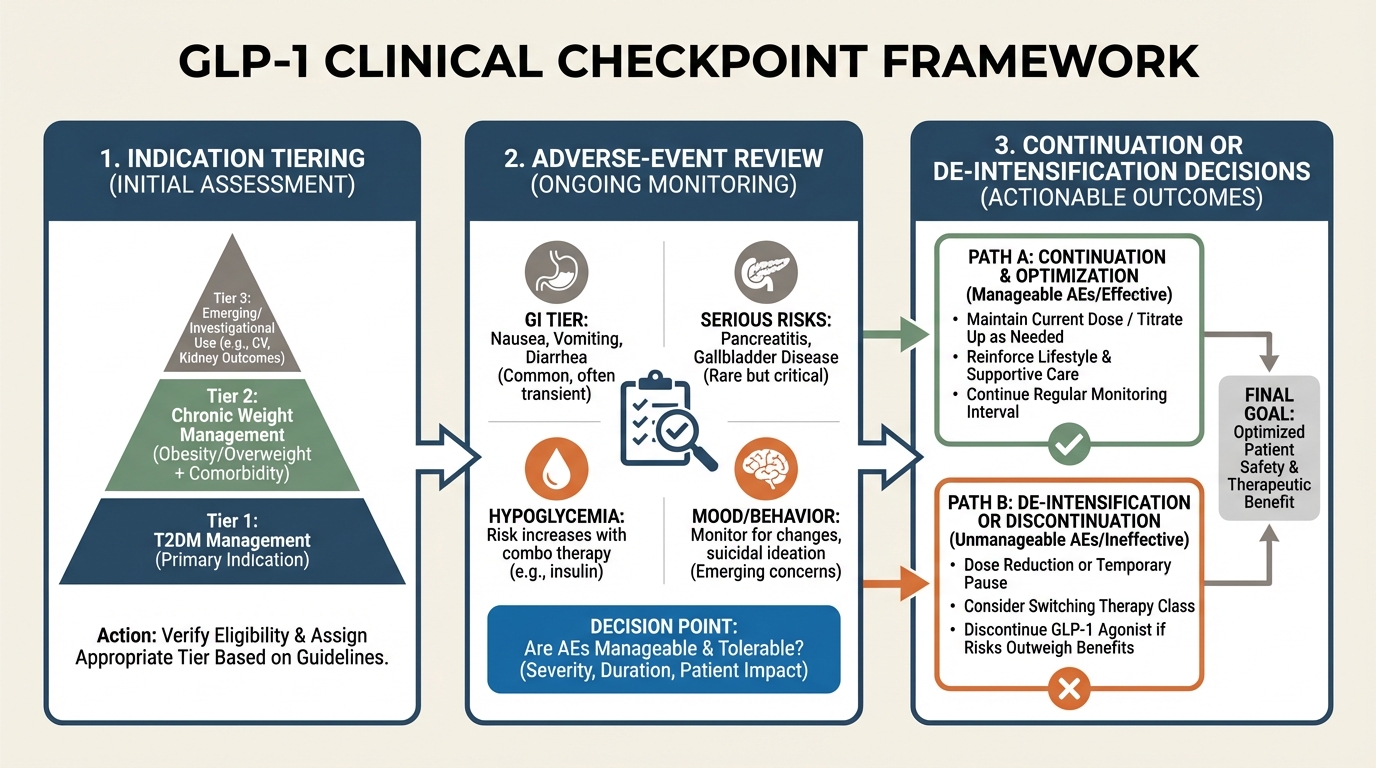
- Define indication strength tier before initiation.
- Document baseline event risk and expected benefit horizon.
- Specify tolerability and safety stop conditions in advance.
- Audit real-world persistence and adverse events quarterly.
Operational Bottom Line
GLP-1 expansion can improve outcomes when teams separate strong signal from weak extrapolation, enforce safety boundaries, and audit real-world drift. The quality gap between disciplined and undisciplined implementation will determine whether this expansion era delivers durable benefit.
Source List
Cardiorenal outcome signal publication context: Nature Medicine (March 2026).
General GLP-1 evidence landscape: PubMed cardiovascular outcomes search.
Clinical safety communication framework: FDA drug safety and availability.