Intermittent Fasting After the Hype Cycle: What the 2026 Evidence Actually Supports
Intermittent fasting survived the hype cycle, but in a narrower role. The current evidence supports it as a viable adherence structure, not as a superior metabolic mechanism.
The last five months produced a necessary correction. Popular narratives kept promising distinct physiologic advantages from timing windows alone, while high-quality synthesis continued to converge on a simpler explanation: most measurable benefit tracks total energy reduction, diet quality, and adherence durability.
Core thesis: fasting is a format choice. It is effective for some people because it structures behavior, not because it consistently outperforms well-designed calorie-reduction alternatives.
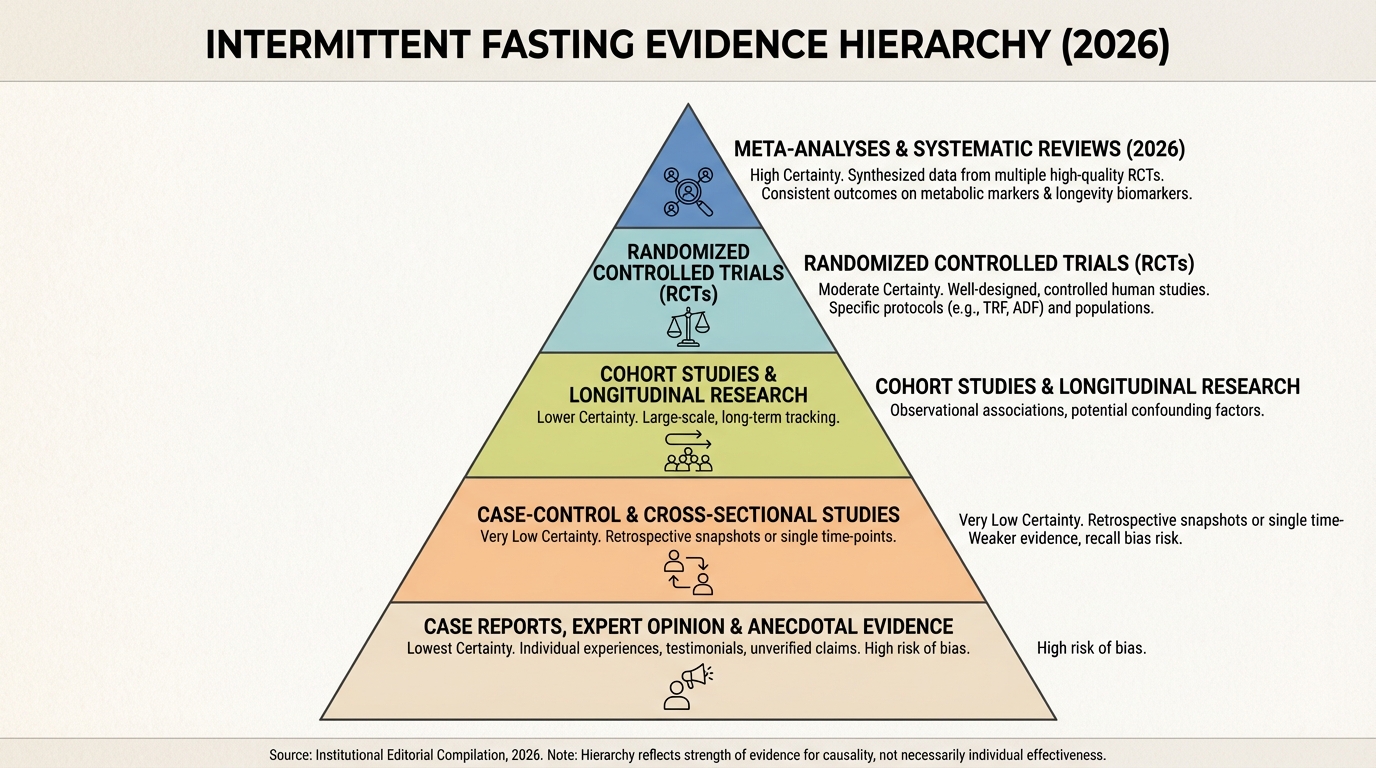
The Evidence Hierarchy in 2026
Systematic reviews and randomized comparisons now make the boundary conditions clearer. Average differences versus standard calorie restriction are small. Heterogeneity is high. Attrition and protocol inconsistency remain persistent limitations. This does not invalidate fasting. It clarifies what claim level is defensible.
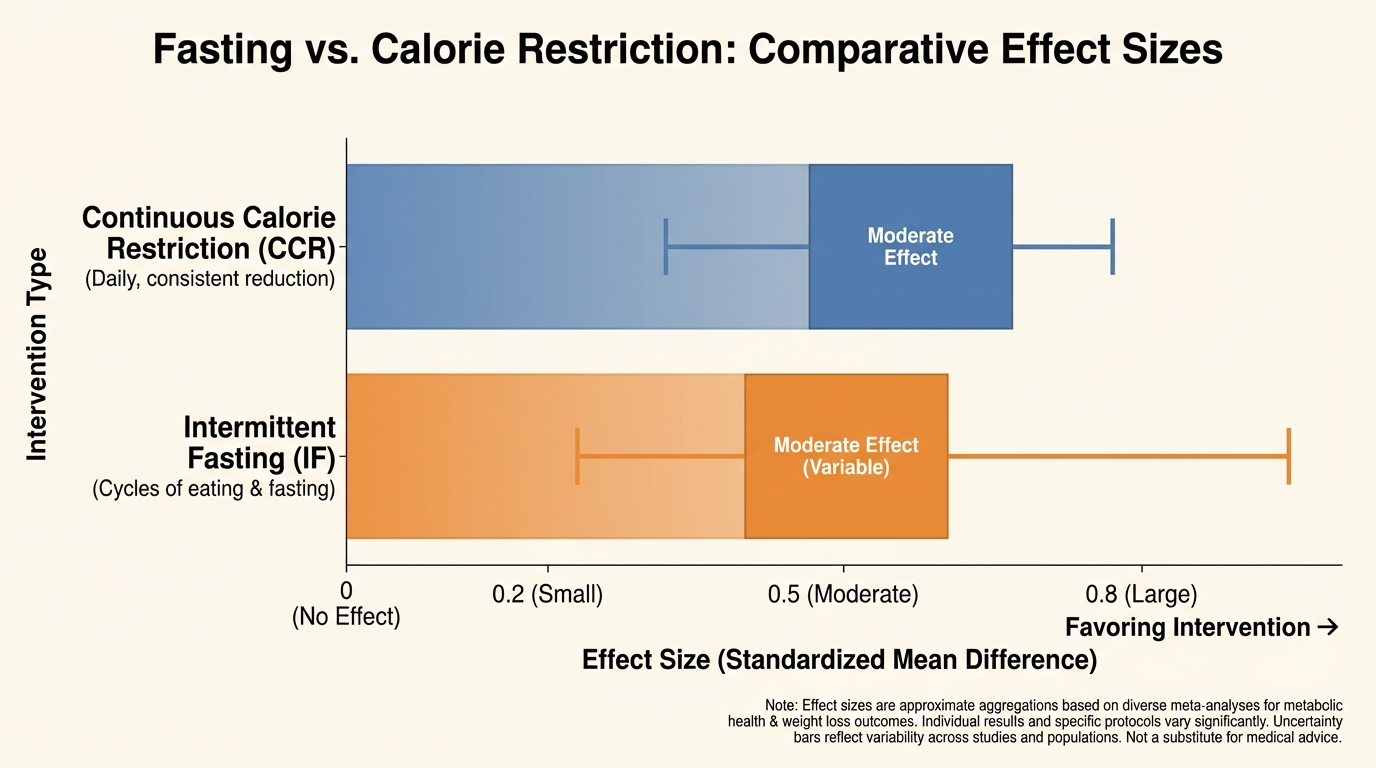
Effect Size Reality
For many cohorts, fasting and continuous restriction land in similar weight and cardiometabolic ranges when adherence is comparable. The practical implication is powerful: do not optimize ideology, optimize execution quality.
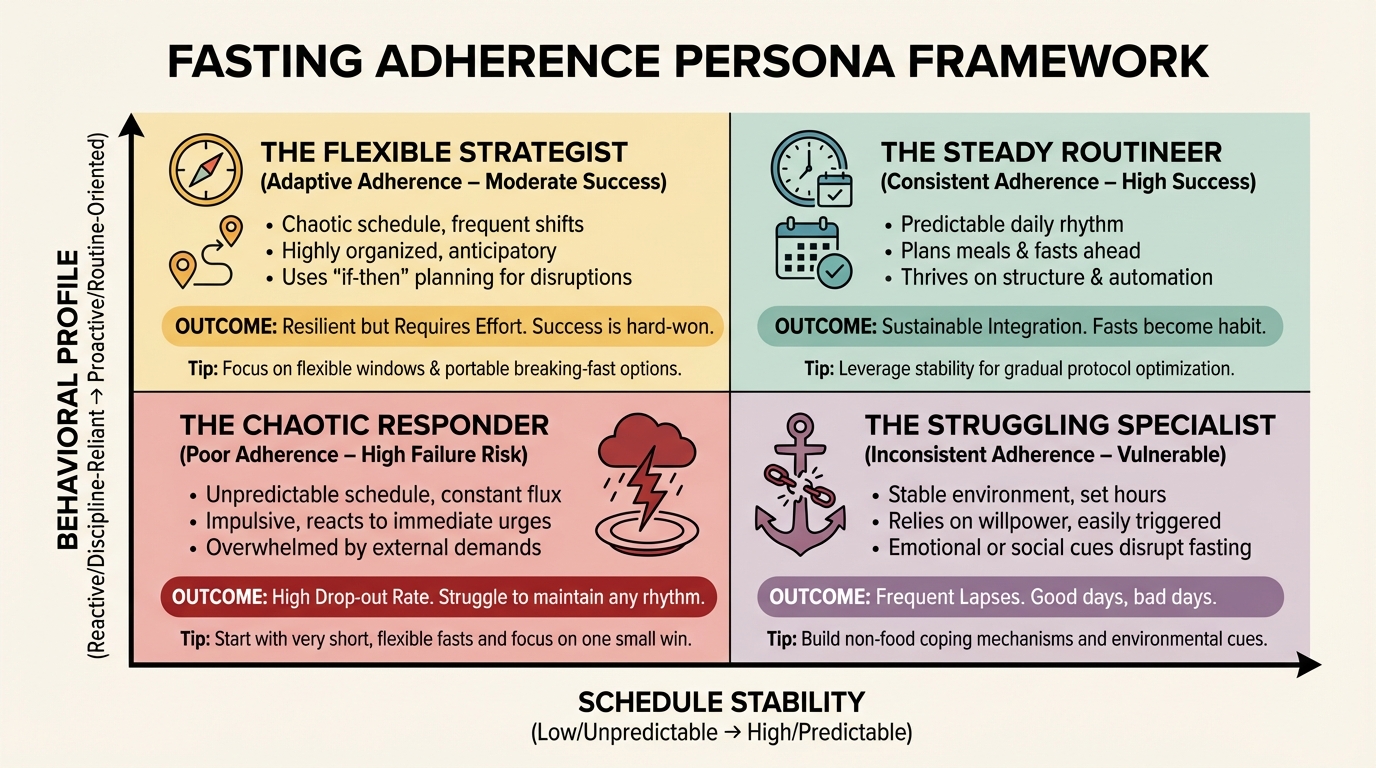
Who Usually Benefits Most
- People who prefer clear eating boundaries over continuous tracking.
- People with stable daily schedules and lower late-night eating pressure.
- People who can preserve protein intake and training quality during deficit phases.
Who Usually Struggles
- Shift workers with variable sleep and meal timing.
- People with high binge-restrict cycling risk.
- People whose training quality collapses under long fasting windows.
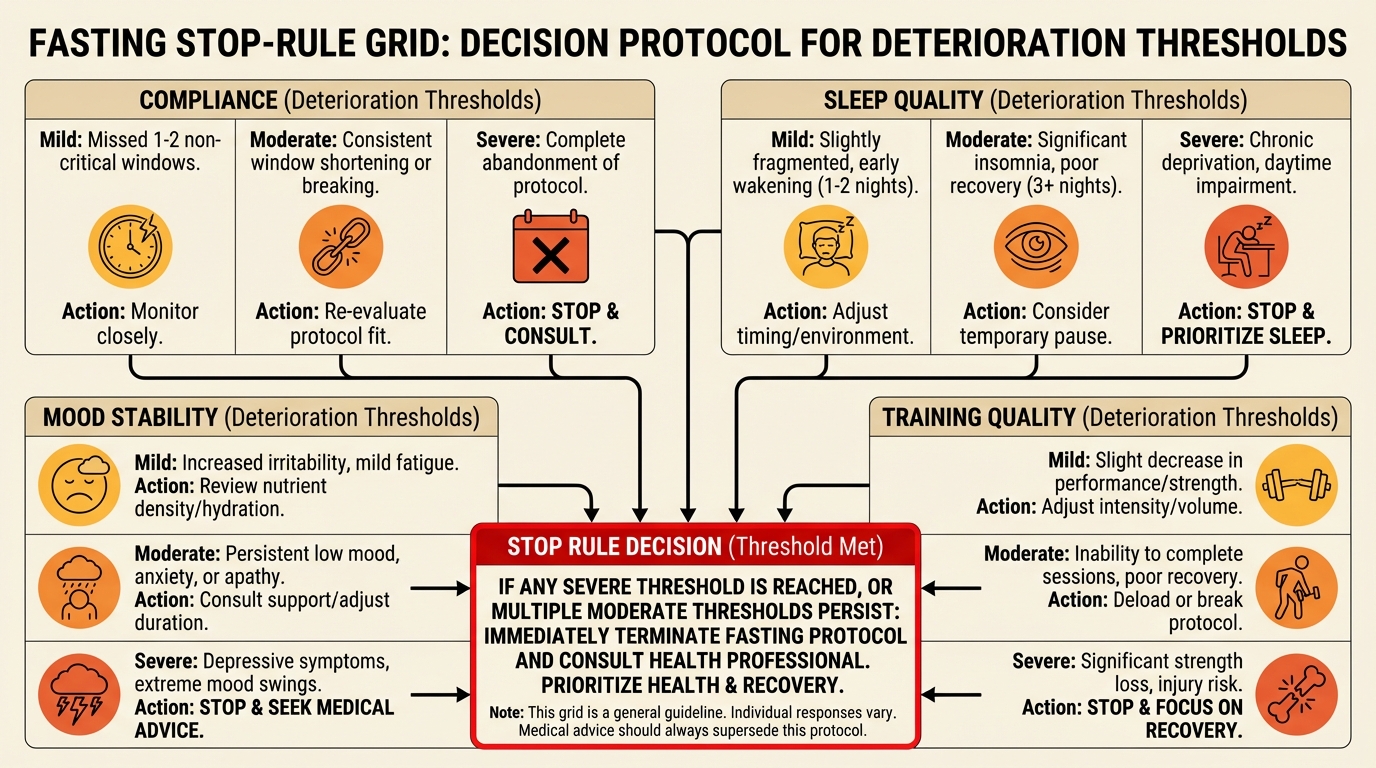
Stop Rules Matter
Most failed protocols fail late because teams do not define stop rules early. If compliance, training output, mood stability, or sleep quality degrade for two consecutive review windows, protocol change should be automatic. Fast iteration outperforms stubborn adherence to a failing structure.
Operational Bottom Line
Intermittent fasting remains useful when matched to behavioral fit and monitored against objective outcomes. It should be framed as one option in a broader evidence-based nutrition system, not as a privileged metabolic shortcut.
Source List
Cochrane coverage and summary of 2026 synthesis update: Cochrane news update.
Cochrane Library search context: Cochrane Library.
NIH Office of Dietary Supplements and weight-management evidence context: NIH ODS.