Lung Cancer Screening: When a Scan Helps and When It Does Not
Annual low-dose CT screening can reduce lung-cancer mortality for people at high risk. It is not a general-purpose scan, and the eligibility details determine whether its expected benefit is likely to exceed its harms.
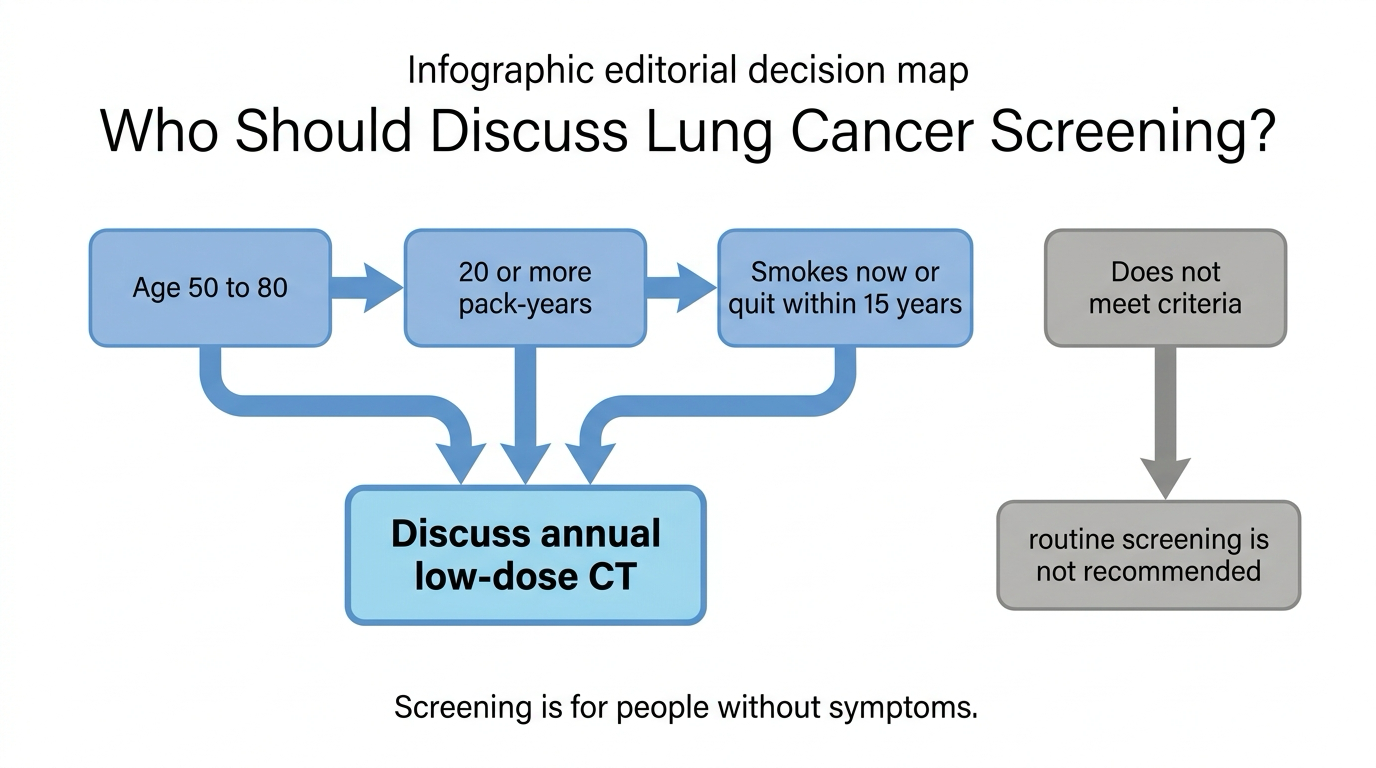
The screening decision begins with smoking exposure, age, and time since quitting. A low-dose CT is different from a diagnostic scan for symptoms: screening is for people without symptoms who meet defined risk criteria.
Calculate smoking exposure accurately
A pack-year is one pack of cigarettes per day for one year. One pack a day for 20 years equals 20 pack-years; two packs a day for 10 years also equals 20. This estimate should be reconstructed with a clinician, especially when smoking intensity changed over time.
What the scan can and cannot do
Low-dose CT can find lung cancer earlier in high-risk groups. It does not prevent cancer and it does not replace stopping smoking. The USPSTF found moderate certainty of a moderate net benefit only when screening is limited to people at high risk and follow-up resembles the care pathways used in trials.
Chest x-rays, sputum testing, and biomarker tests are not substitutes for recommended low-dose CT screening. A new cough, coughing blood, unexplained weight loss, or other concerning symptoms should prompt clinical assessment rather than a screening pathway.
Screening has real tradeoffs
CT screening can identify nodules that prove not to be cancer. Follow-up imaging, invasive testing, incidental findings, anxiety, radiation exposure, and overdiagnosis are potential harms. The appropriate question is not whether a scan is harmless; it is whether its expected benefit is favorable for a particular risk profile.
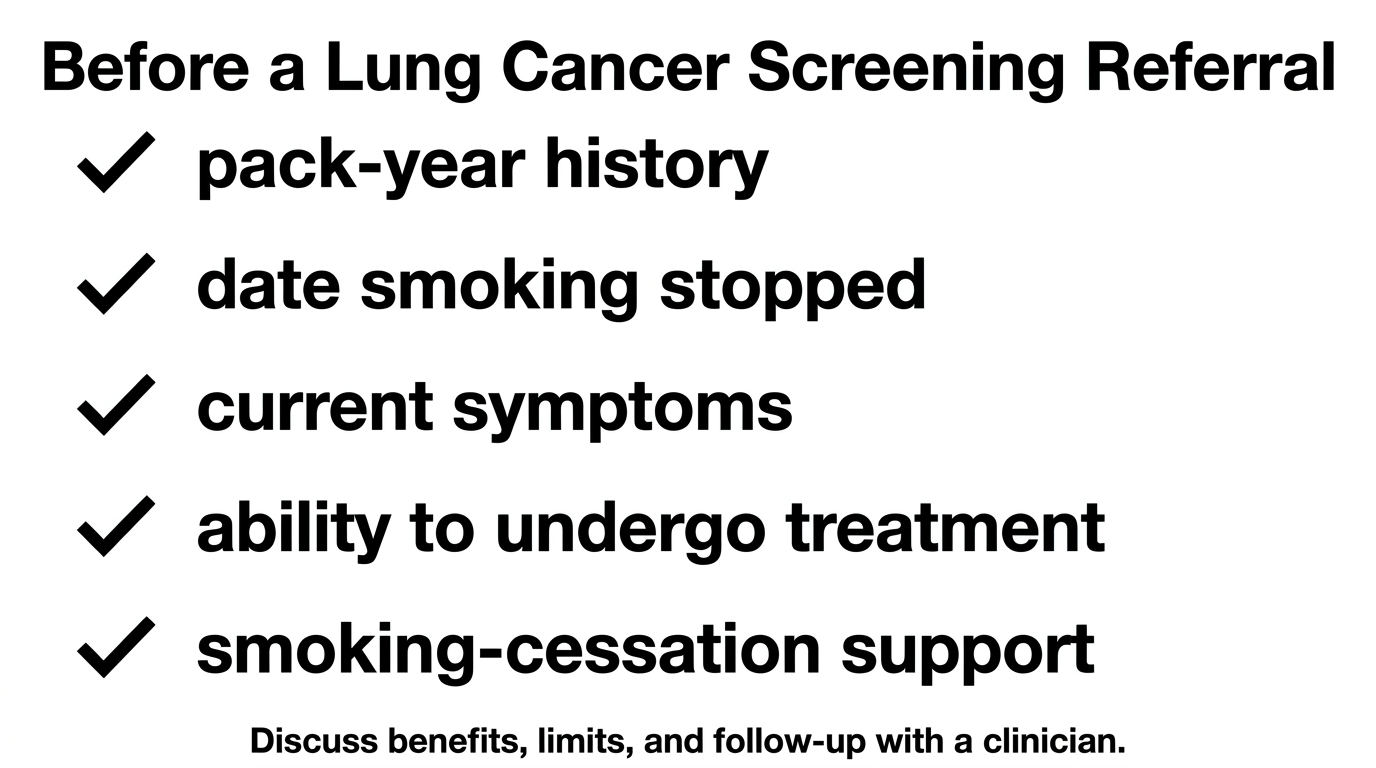
| Question for the appointment | Why it changes the decision |
|---|---|
| What is the smoking history in pack-years? | It is part of the eligibility threshold. |
| When did smoking stop? | The USPSTF screening recommendation ends after 15 smoke-free years. |
| Are there symptoms now? | Symptoms may require diagnostic evaluation rather than screening. |
| Would treatment be possible if cancer were found? | Screening is not recommended when health substantially limits curative treatment. |
Use the scan as one prevention decision
Screening programs should pair referral with smoking-cessation treatment for people who currently smoke. The sleep-apnea guide shows why targeted testing must match the condition and risk profile; the prevention planning framework explains how to prioritize evidence-backed prevention without treating screening as a longevity score.
Sources
This article is educational and does not provide medical advice, diagnosis, or an individual screening recommendation.