Could a Medication Be Raising Your Fall Risk?
A fall is rarely explained by one prescription alone. Yet medicines that cause drowsiness, dizziness, vision changes, or slower reactions can make a balance problem materially more dangerous. The useful next step is a structured medication review, not an abrupt stop.
CDC describes medication review as one part of its STEADI-Rx fall-prevention approach for adults aged 65 and older. The framework is deliberately collaborative: screen for fall risk, review medicines, share relevant findings with the prescriber, and decide whether a change is appropriate. A medicine can be necessary and still deserve review when symptoms or circumstances change.
Why medication effects matter
CDC identifies sleep medicines, anxiety medicines, blood-pressure medicines, and chronic-pain medicines as categories that can contribute to drowsiness, loss of balance, vision changes, and slower reaction time. Risk depends on the particular medicine, dose, timing, combination, kidney and liver function, blood pressure, and a person’s underlying mobility and vision. It is not possible to declare a medication unsafe from its category alone.
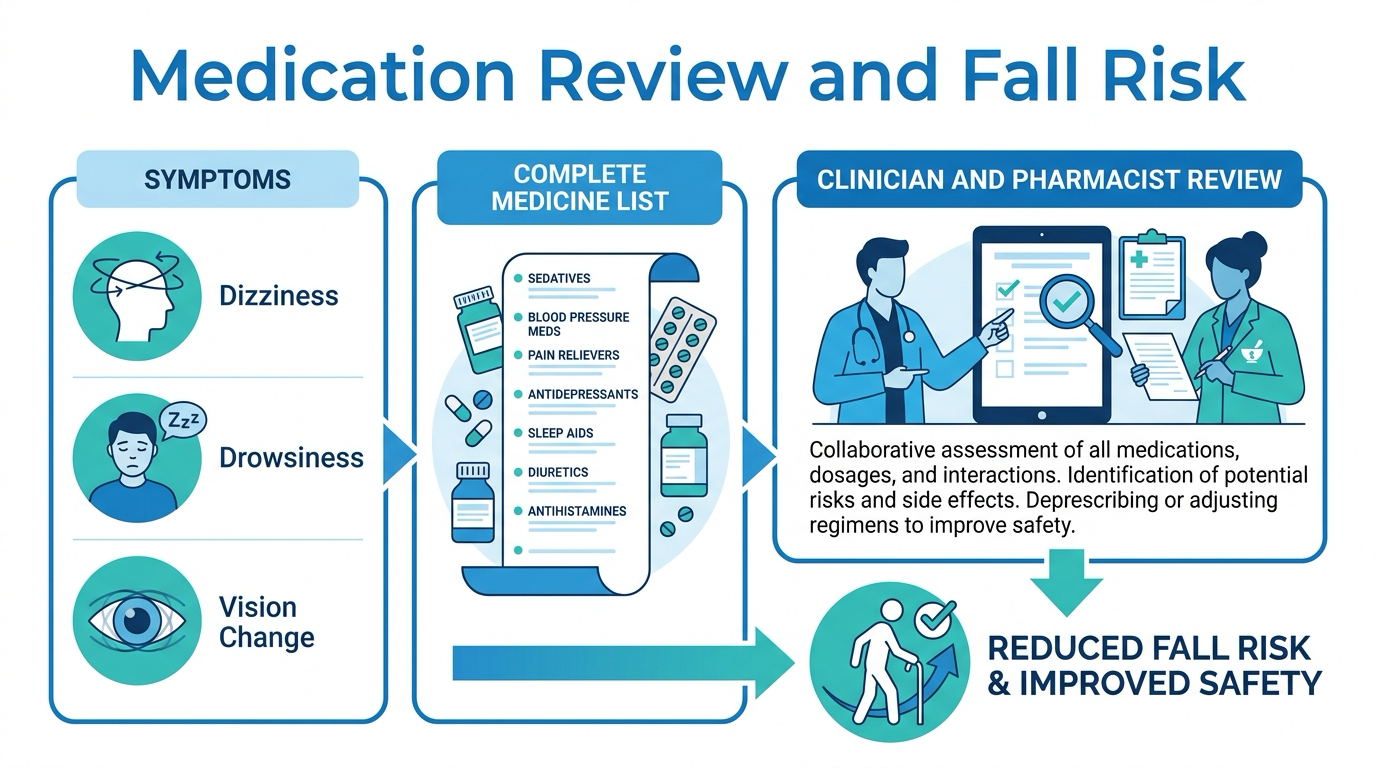
Start with a complete and usable list
| Bring or record | Why it changes the review |
|---|---|
| Every prescription, dose, and schedule | Timing can reveal symptoms after a new dose or a regimen change. |
| Over-the-counter sleep, allergy, cold, or pain products | These may add sedation or interact with prescription medicines. |
| Falls, near-falls, dizziness, or new unsteadiness | A specific event and time pattern are more actionable than a general concern. |
| Alcohol and supplements | They can alter alertness, blood pressure, or the effect of medicines. |
| Recent illness, dehydration, or a new provider | These can change tolerance, duplicate treatment, or create a temporary risk. |
A medication list is most useful when it includes what is actually taken, not merely what appears in a portal. Bring bottles or a pharmacy printout if assembling the list is difficult. Ask whether the regimen has duplicate effects, whether a dose or time of day is contributing to symptoms, and whether monitoring is needed before any adjustment.
Separate a review from a self-directed change
Some medicines must not be stopped suddenly. Others treat conditions that can themselves increase fall risk if uncontrolled. The clinical question is whether the benefit remains proportionate to the present risk and whether a safer schedule, dose, alternative, or non-drug support is available. That decision belongs with the clinician who knows the diagnosis and the pharmacist who can assess the medication list.
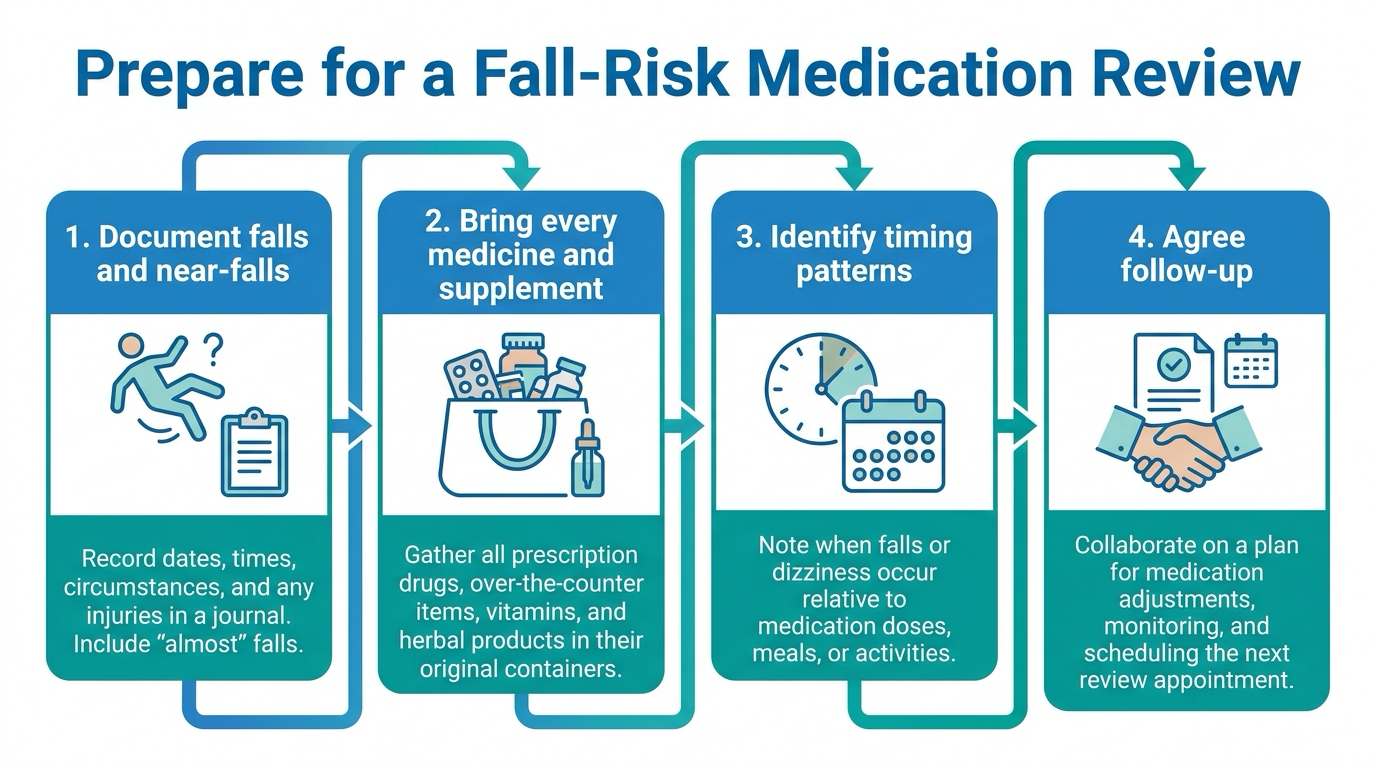
Make the conversation specific
Ask: Did this symptom begin after a medicine was started or changed? Are two products producing similar effects? Could blood-pressure changes, dehydration, vision, footwear, home hazards, or strength be part of the event? Who will make the change if one is needed, and when will it be checked? CDC’s STEADI-Rx materials are designed around this pharmacy–provider handoff because a pharmacy review can identify a concern but does not replace diagnosis or prescribing judgment.
Urgent symptoms after a fall, including a head injury, loss of consciousness, new weakness, severe pain, or inability to bear weight, need prompt medical evaluation. For recurring dizziness or near-falls without an emergency, schedule a medication and fall-risk review before the pattern becomes another injury.
Sources
Centers for Disease Control and Prevention, Pharmacy Care (STEADI-Rx), updated August 4, 2025.
Centers for Disease Control and Prevention, STEADI: Older Adult Fall Prevention.
This article is educational and does not provide medical advice, diagnosis, or a medication recommendation. Do not stop or change a prescribed medicine without clinical guidance.