Article
Biomarkers for Senescent Cell Burden
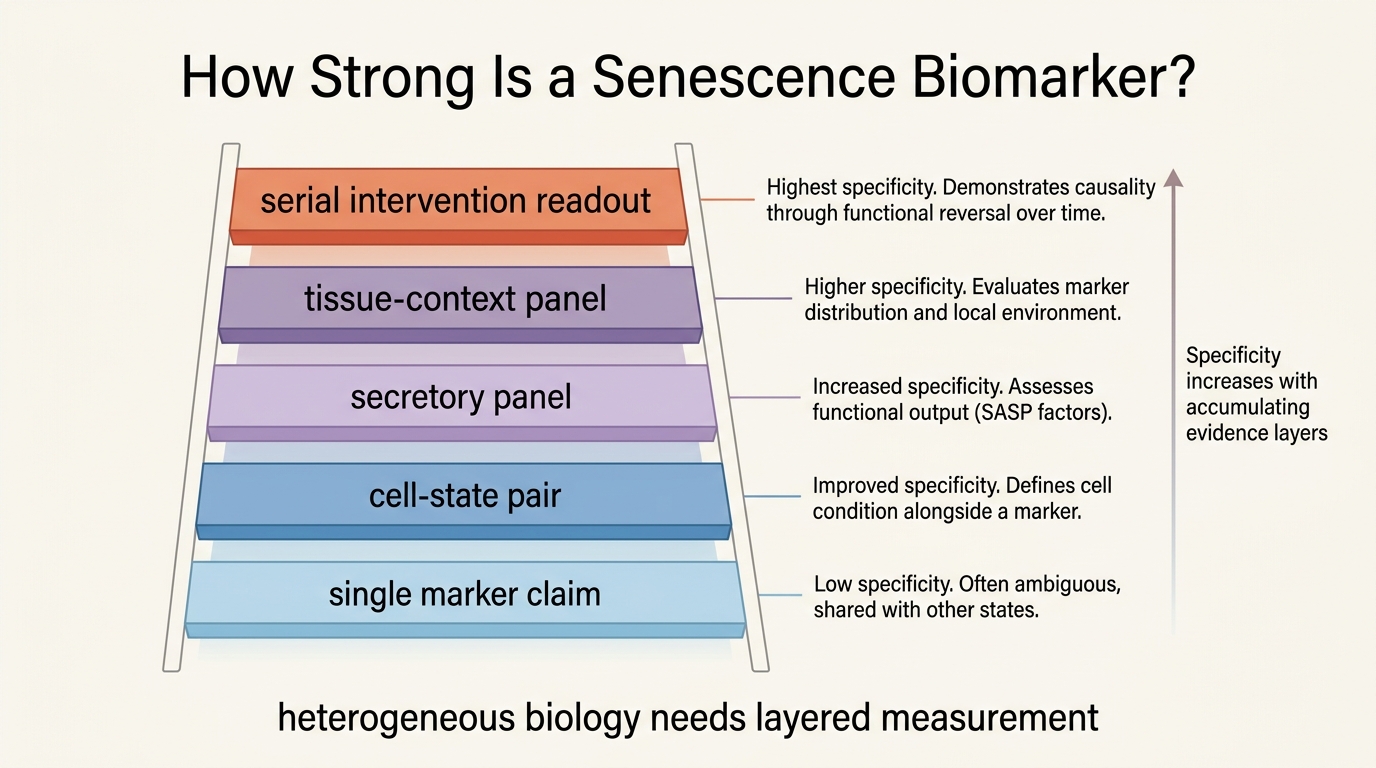
A 2026 LifeMeter analysis of how senescent cell burden is actually measured, why no single biomarker is sufficient, and which marker combinations are closest to decision-grade use.
Senescence became central to geroscience because damaged cells do not remain passive. They alter tissue signaling, inflammation, repair quality, and the operating environment of nearby cells.
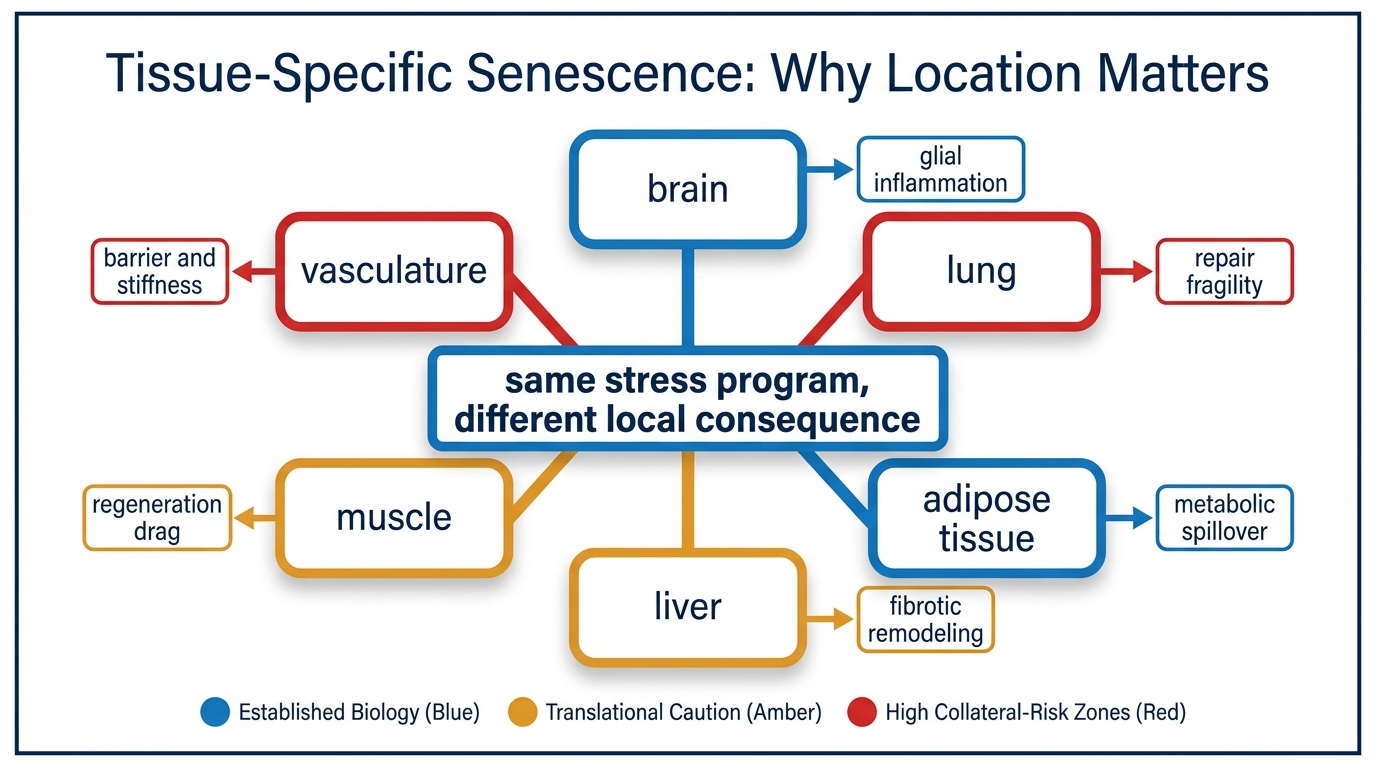
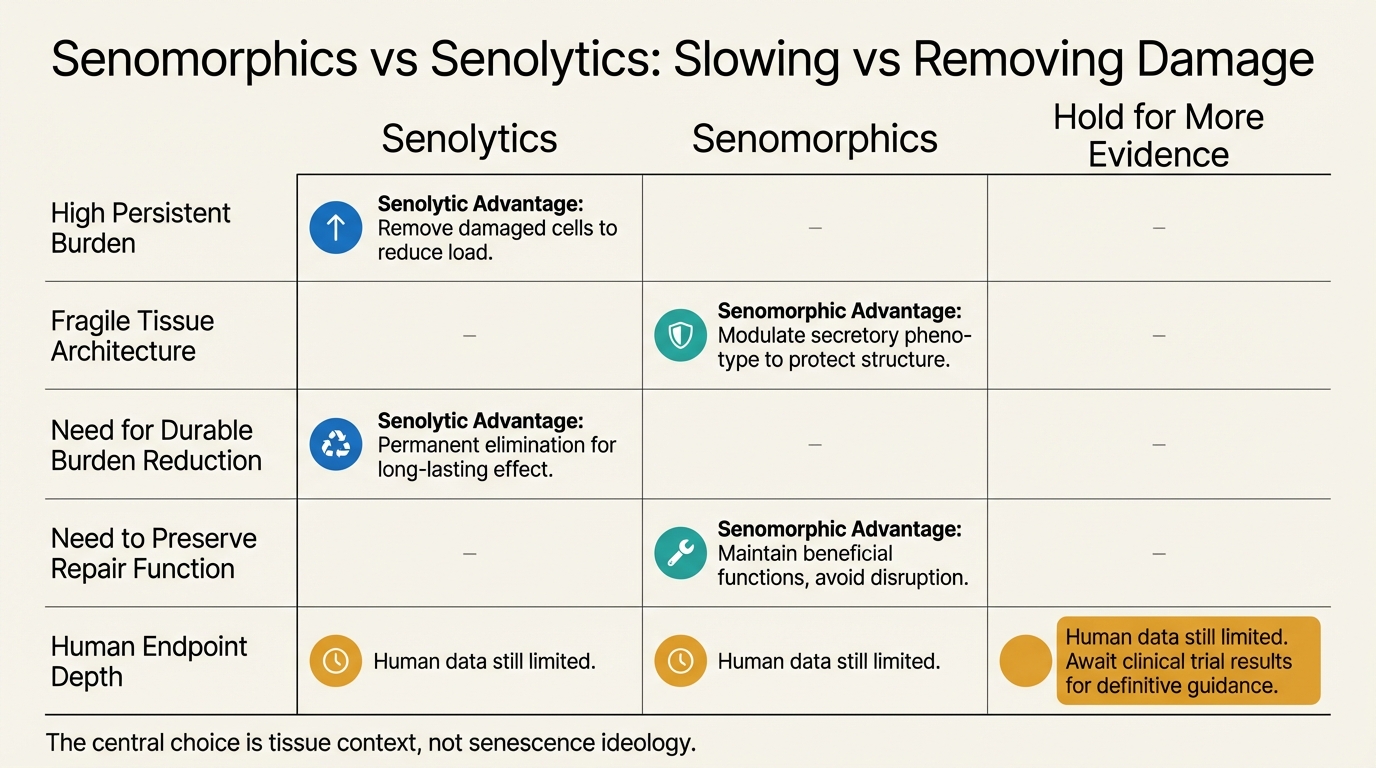
The hard part is that not all senescence should be treated the same way. Some contexts call for suppression, some for clearance, and some for no direct intervention at all because the surrounding tissue logic matters more than a universal anti-senescence script.
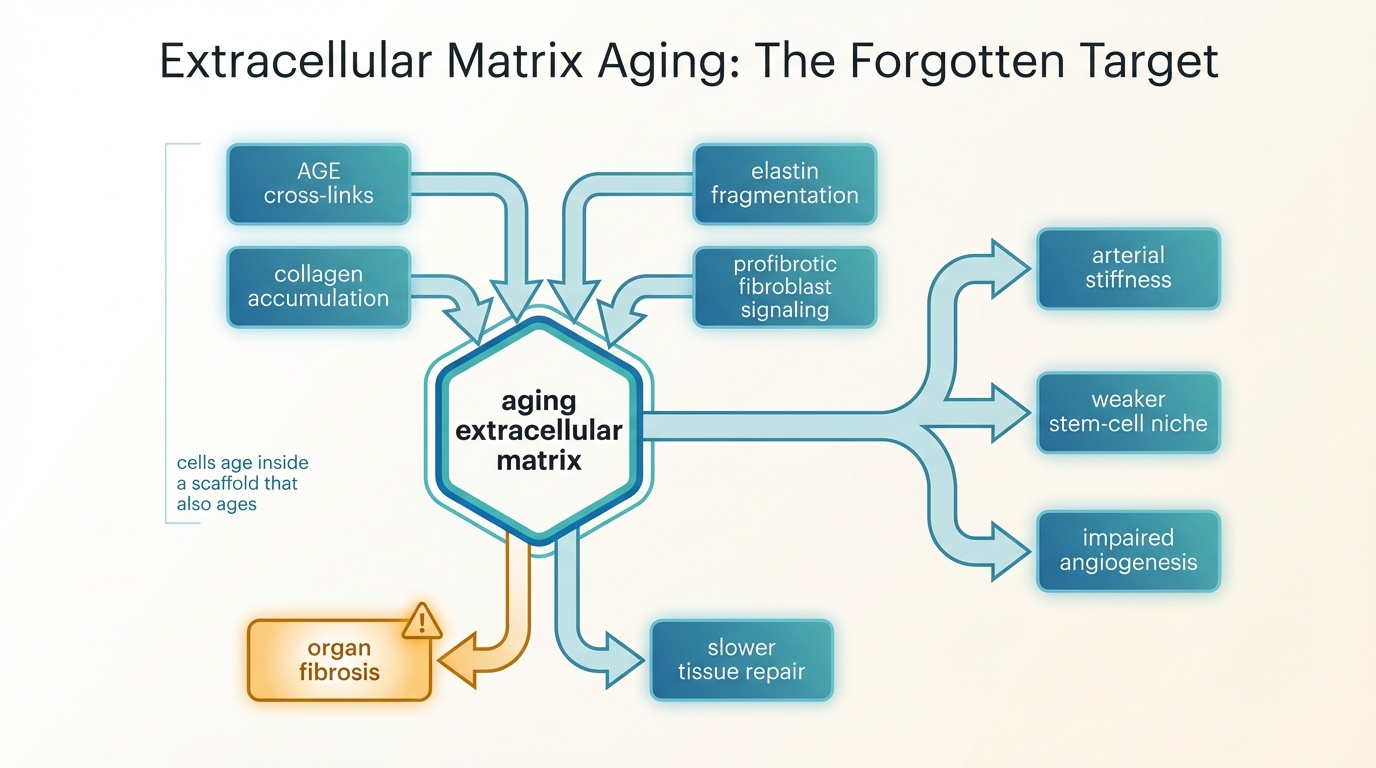
This cluster gathers the work in the repo that treats senescence as a contextual systems problem. It includes the difference between senolytics and senomorphics, the state of human translation, and how adjacent repair bottlenecks limit the expected payoff of any single clearance strategy.
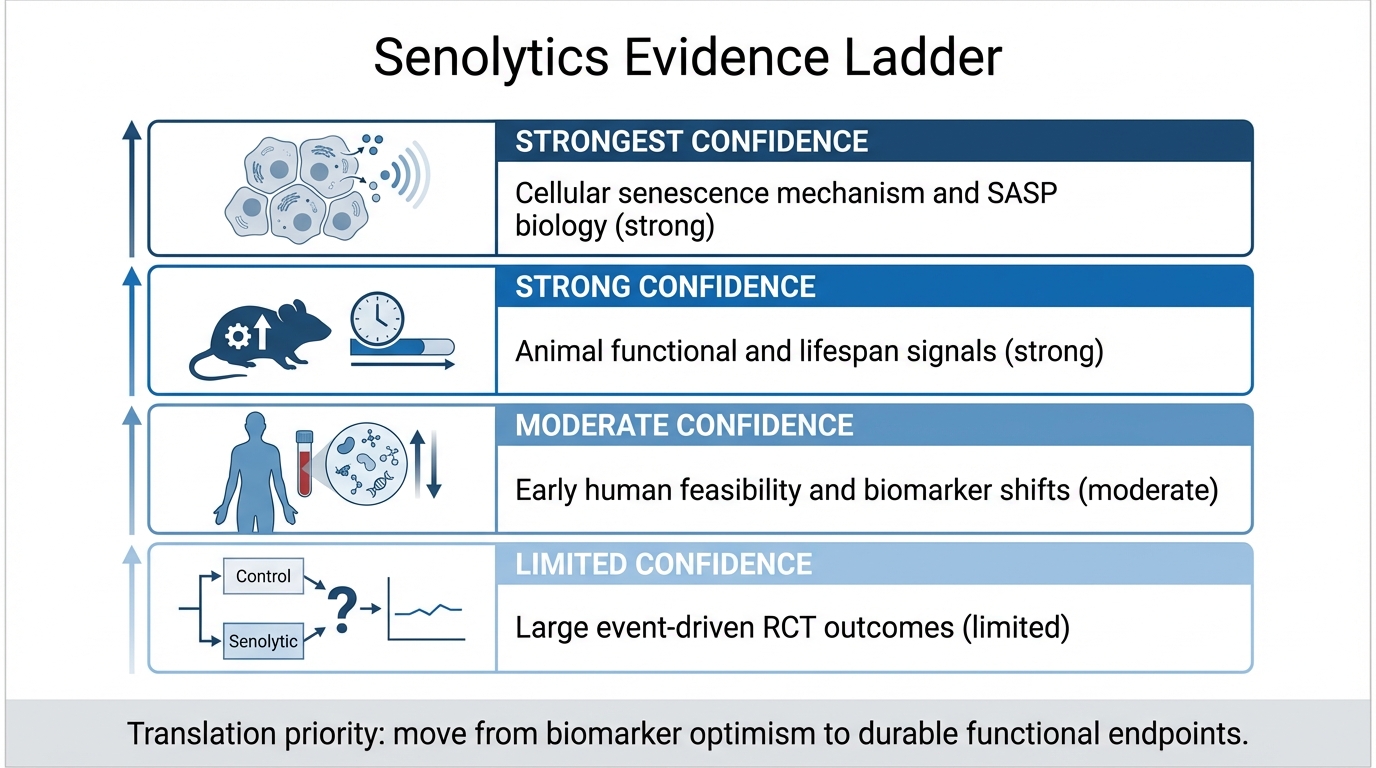
For readers trying to judge intervention quality, this is one of the best examples of why mechanistic plausibility is not enough. A target can be important while the intervention stack around it remains immature.