Why This Cluster Matters
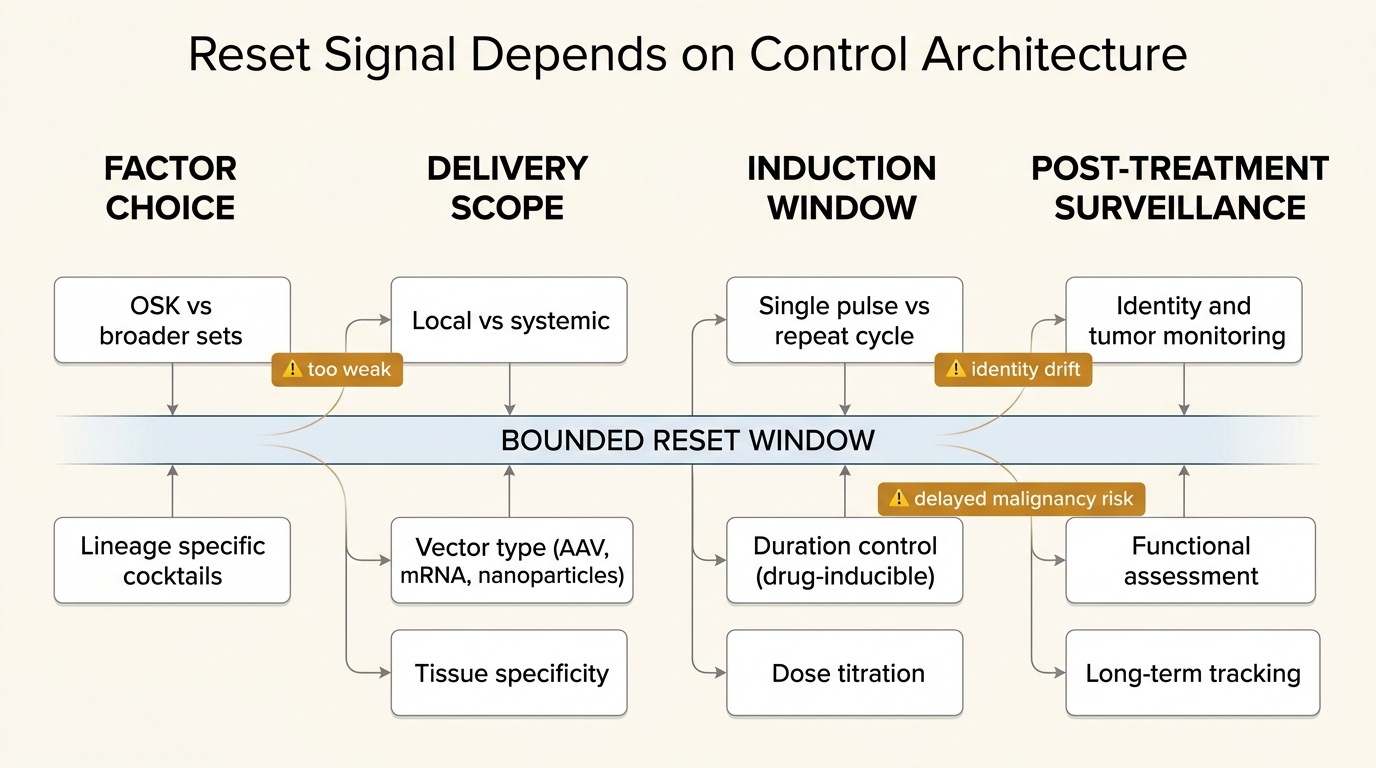
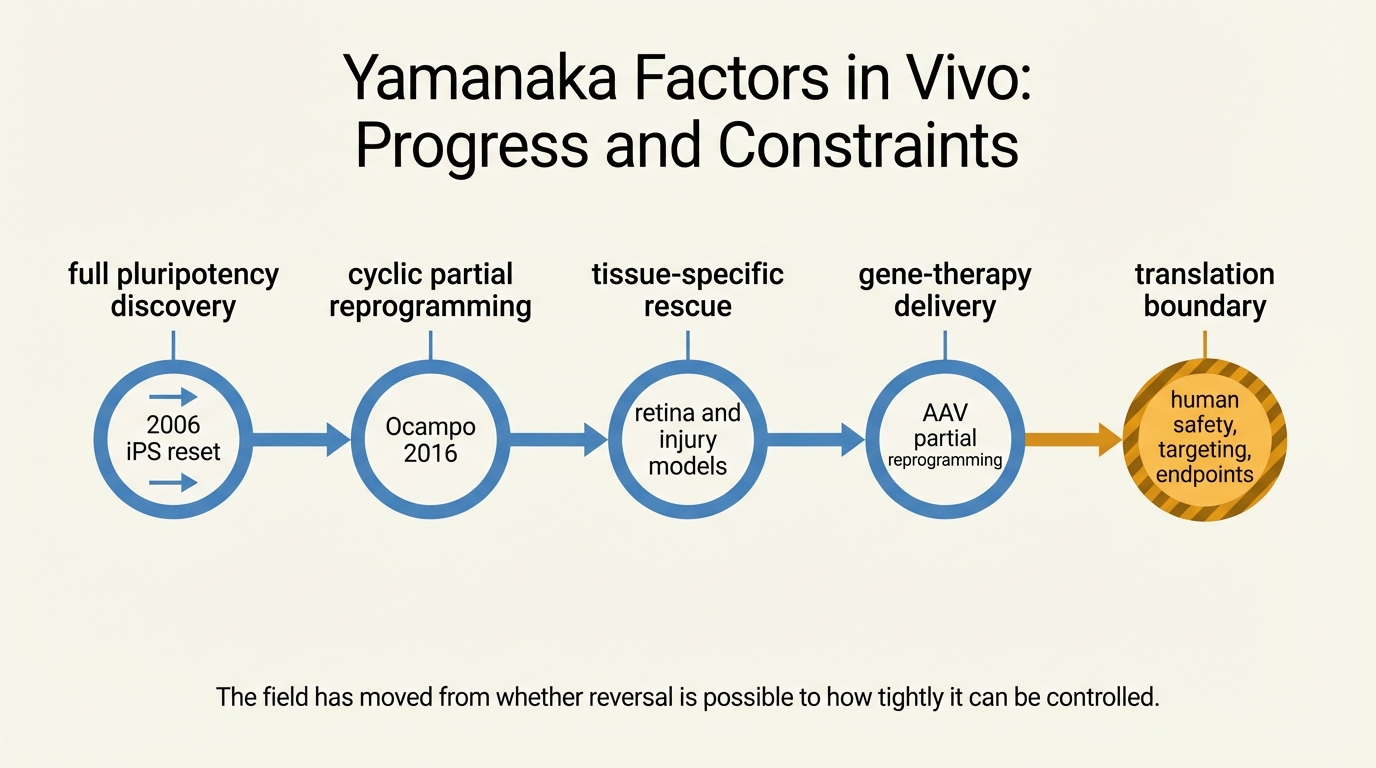
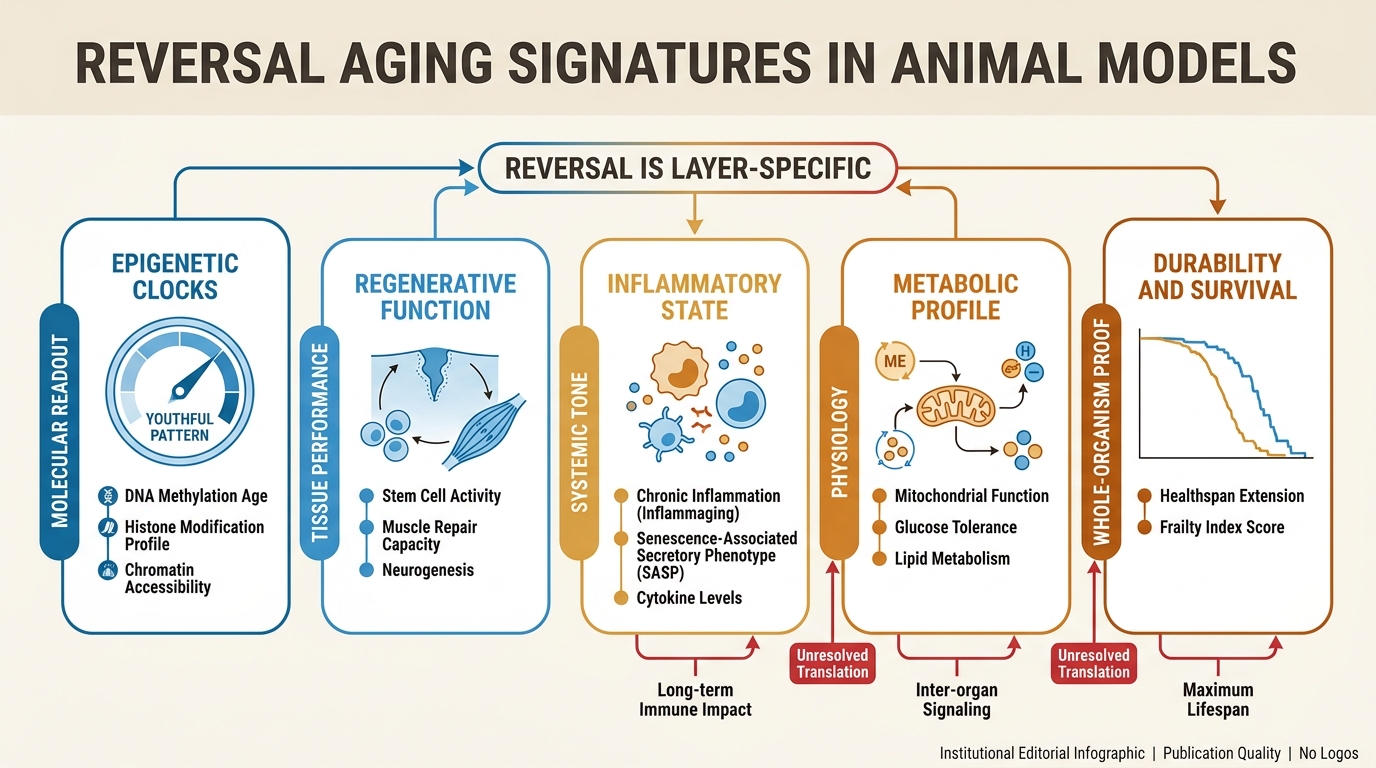
The excitement is rational. Partial reset programs now show enough preclinical signal that dismissal is no longer a serious position. The hard question has shifted to control architecture: delivery, shutdown, tissue specificity, and identity preservation.
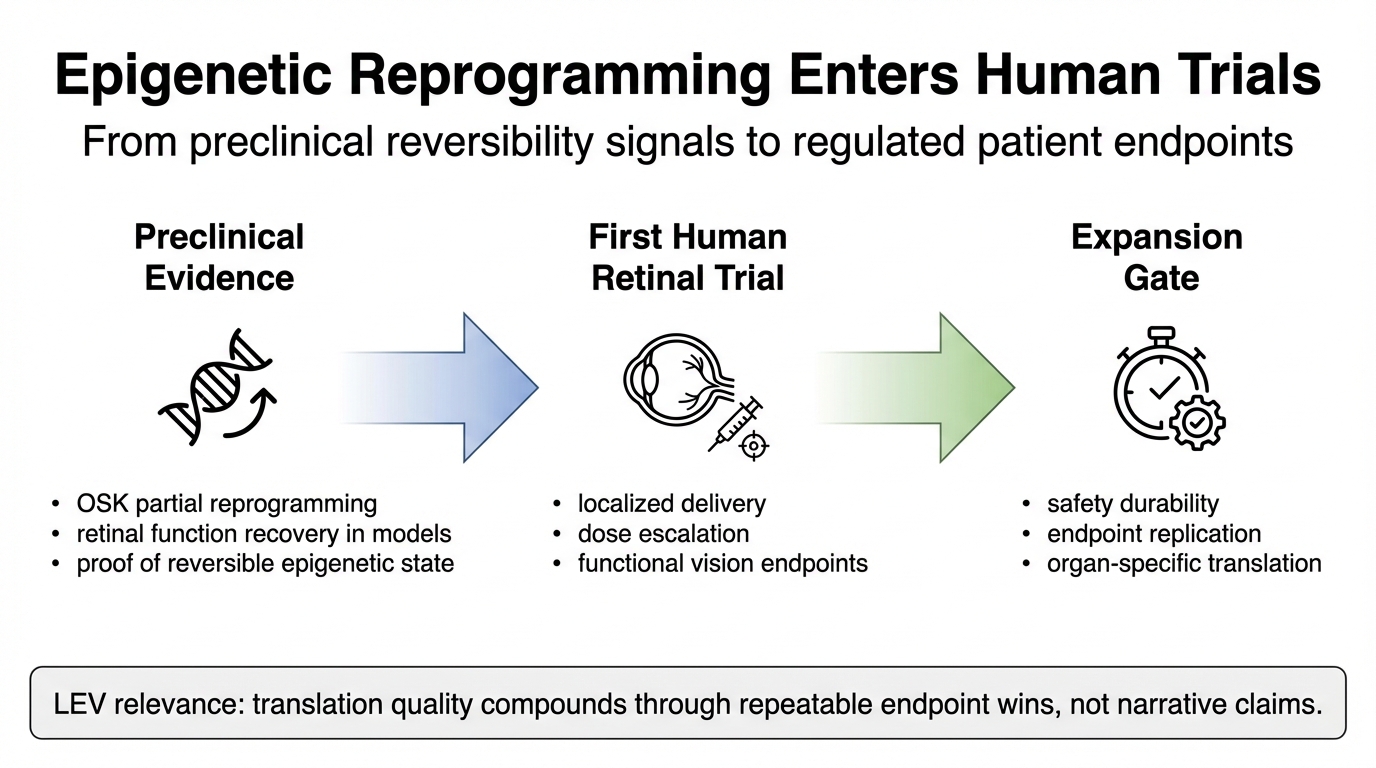
These articles track that narrower and more useful question. Instead of asking whether reprogramming is conceptually possible, they examine whether current strategies can remain inside a therapeutic operating window without drifting into cancer risk, dedifferentiation, or unstable effects.
That frame is also the right one for discovery readers. A platform can be real while the human deployment case remains early. The relevant distinction is between mechanistic possibility and clinically governable medicine.