The Urine Test That Can Reveal Kidney Risk Early
A routine urine sample can reveal albumin that healthy kidneys usually keep in the bloodstream. The result is a risk signal, not a diagnosis by itself. Its value is greatest when it starts an appropriate conversation before kidney disease becomes obvious through symptoms.
NIDDK defines albuminuria as too much albumin in urine, which can be a sign of kidney disease. A provider may use a dipstick test and then measure urine albumin and creatinine to calculate an albumin-to-creatinine ratio, or UACR.
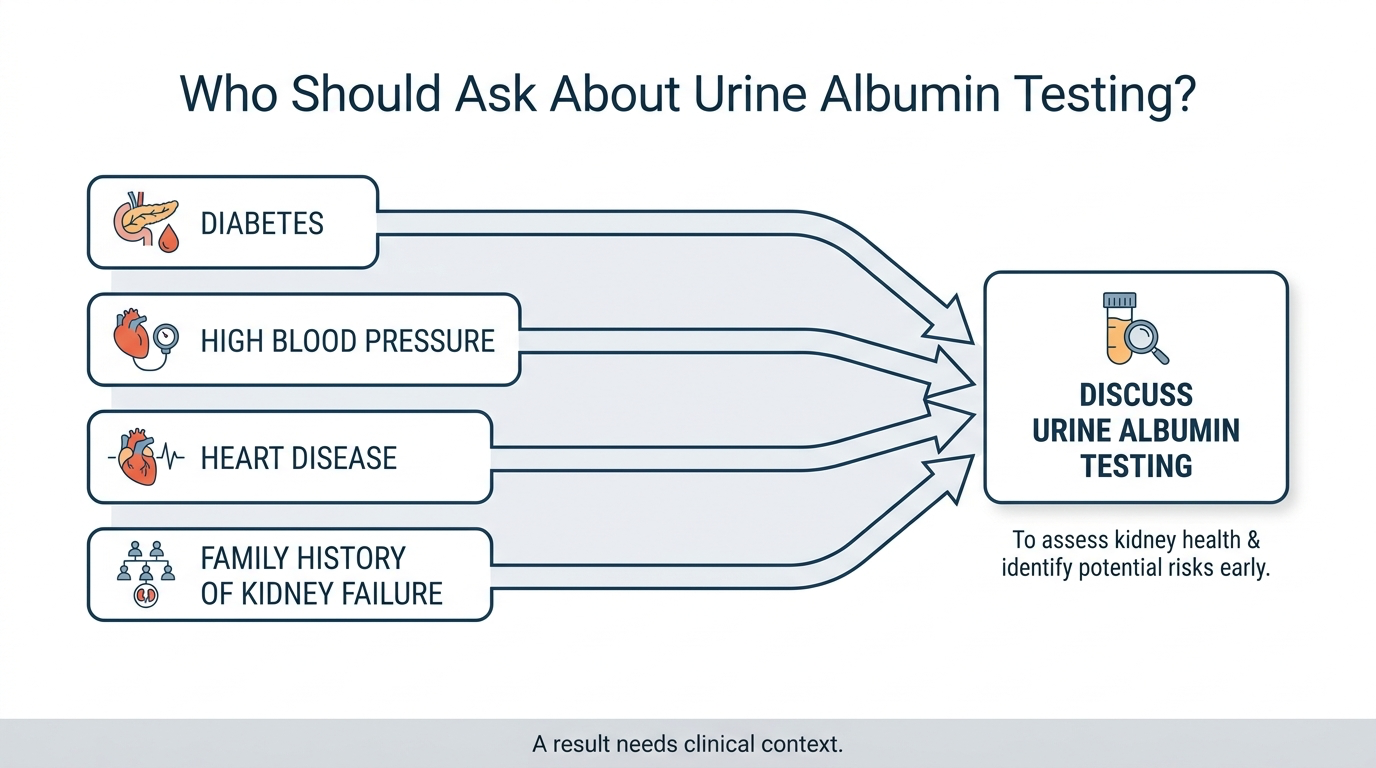
Who has a reason to ask
Diabetes, high blood pressure, heart disease, and a family history of kidney failure are kidney-disease risk factors cited by NIDDK. People with one or more of these factors have a concrete reason to ask whether urine albumin testing belongs alongside blood-pressure and kidney-function monitoring.
Use the result in context
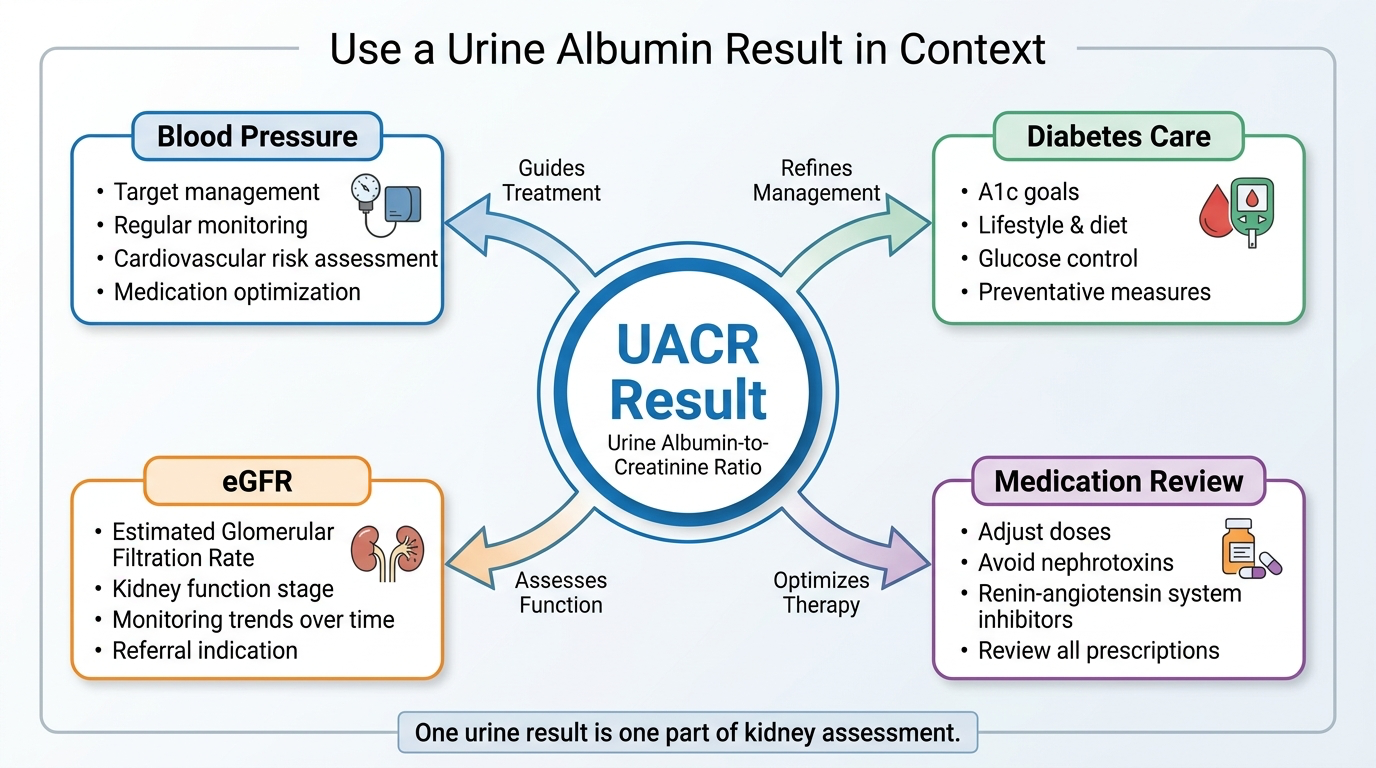
Urine albumin measurement helps diagnose kidney disease and monitor progression. NIDDK states that stable or lower urine albumin can indicate treatment is working, and that lowering it may reduce the chance of progression to kidney failure. The finding does not identify a cause or a treatment plan on its own.
ACE inhibitors and ARBs may reduce albuminuria, according to NIDDK. That does not justify starting, stopping, or changing medicine independently. The clinician needs to assess blood pressure, other results, side effects, interactions, and monitoring requirements.
Questions for the appointment
| Question | Why it helps |
|---|---|
| Do my risk factors make testing appropriate? | Risk determines frequency and follow-up. |
| Was a dipstick followed by UACR when appropriate? | The ratio provides more specific information. |
| Should the result be repeated? | Persistence and clinical context matter. |
| How does this fit with eGFR, blood pressure, and medicines? | Albuminuria is one part of kidney assessment. |
Symptoms such as swelling or meaningful changes in urination need medical evaluation, not reliance on screening information. If testing is ordered, ask what persistent findings would change and who will follow up.
Sources
National Institute of Diabetes and Digestive and Kidney Diseases, Albuminuria: Albumin in the Urine.
National Institute of Diabetes and Digestive and Kidney Diseases, Chronic Kidney Disease overview.
This article is educational and does not provide medical advice, diagnosis, or an individual treatment recommendation.