Who Needs an RSV Vaccine in 2026?
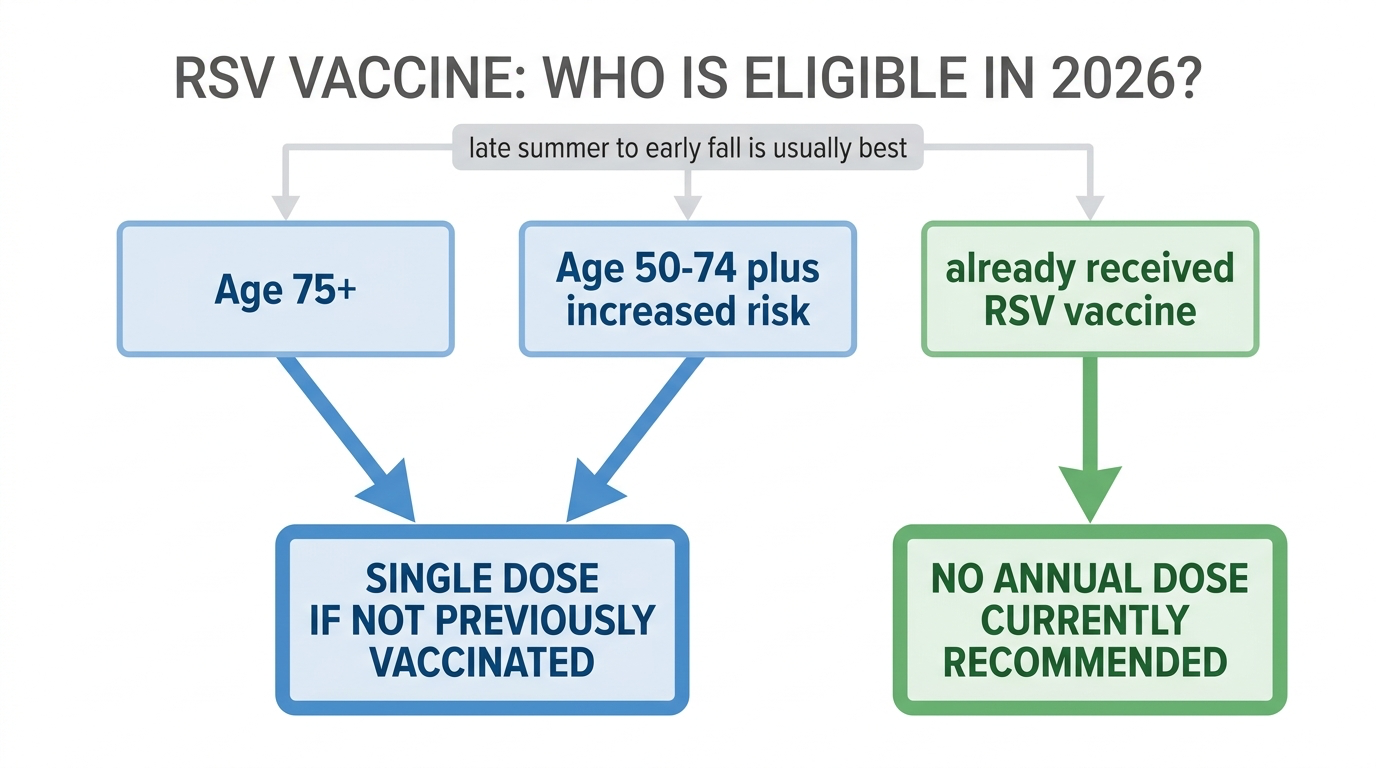
The current CDC recommendation is a single RSV vaccine dose for every adult 75 and older, plus adults 50 to 74 with an increased risk of severe RSV illness. It is not an annual vaccine.
RSV can cause severe respiratory disease in older adults and in adults with certain health conditions. The useful decision is not whether every adult should pursue another seasonal shot. It is whether an adult meets the current CDC recommendation and has already received an RSV vaccine.
Start with age and prior vaccination
CDC recommends one dose for all adults age 75 or older. Adults age 50 through 74 qualify when they have a condition or circumstance that increases the risk of severe RSV illness. The recommendation is currently one dose, not a yearly dose. Someone who has already received an RSV vaccine has completed the current recommendation unless CDC guidance changes.
Which risk factors matter at ages 50 to 74
CDC lists chronic cardiovascular disease, chronic lung or respiratory disease, end-stage renal disease, diabetes with specified complications or certain treatment, neurologic or neuromuscular conditions that impair airway clearance, chronic liver or hematologic disease, severe obesity, moderate or severe immune compromise, and residence in a nursing home. Clinicians may also consider frailty, concern about undiagnosed chronic conditions, or challenges obtaining higher-level care in remote or rural settings.
Isolated hypertension is excluded from CDC's chronic cardiovascular-disease example. The list is a guide to a clinical conversation, not a substitute for individualized advice or a way to self-diagnose risk.
Use the decision sequence
| Question | Current implication |
|---|---|
| Are you 75 or older? | CDC recommends one RSV vaccine dose if you have not already received one. |
| Are you 50 to 74 with an increased-risk condition or circumstance? | Discuss the single dose with a clinician or vaccinating pharmacist. |
| Have you already received an RSV vaccine? | CDC does not currently recommend another dose each season. |
| Are other vaccines due at the same visit? | They can be coadministered, but the decision should account for expected side effects and the feasibility of another visit. |
What timing changes and what it does not
For an eligible adult who has not been vaccinated, CDC identifies August through October as the period when vaccination will usually provide the most benefit in most of the continental United States. Eligibility does not disappear outside that window. The date affects expected seasonal benefit; it does not turn the recommendation into an annual series.
CDC lists three vaccines for adults 50 and older and does not express a preference among them. Contraindications, precautions, availability, and any plan to receive other vaccines should be discussed with the clinician or pharmacist who is providing the dose.
Prepare for the appointment
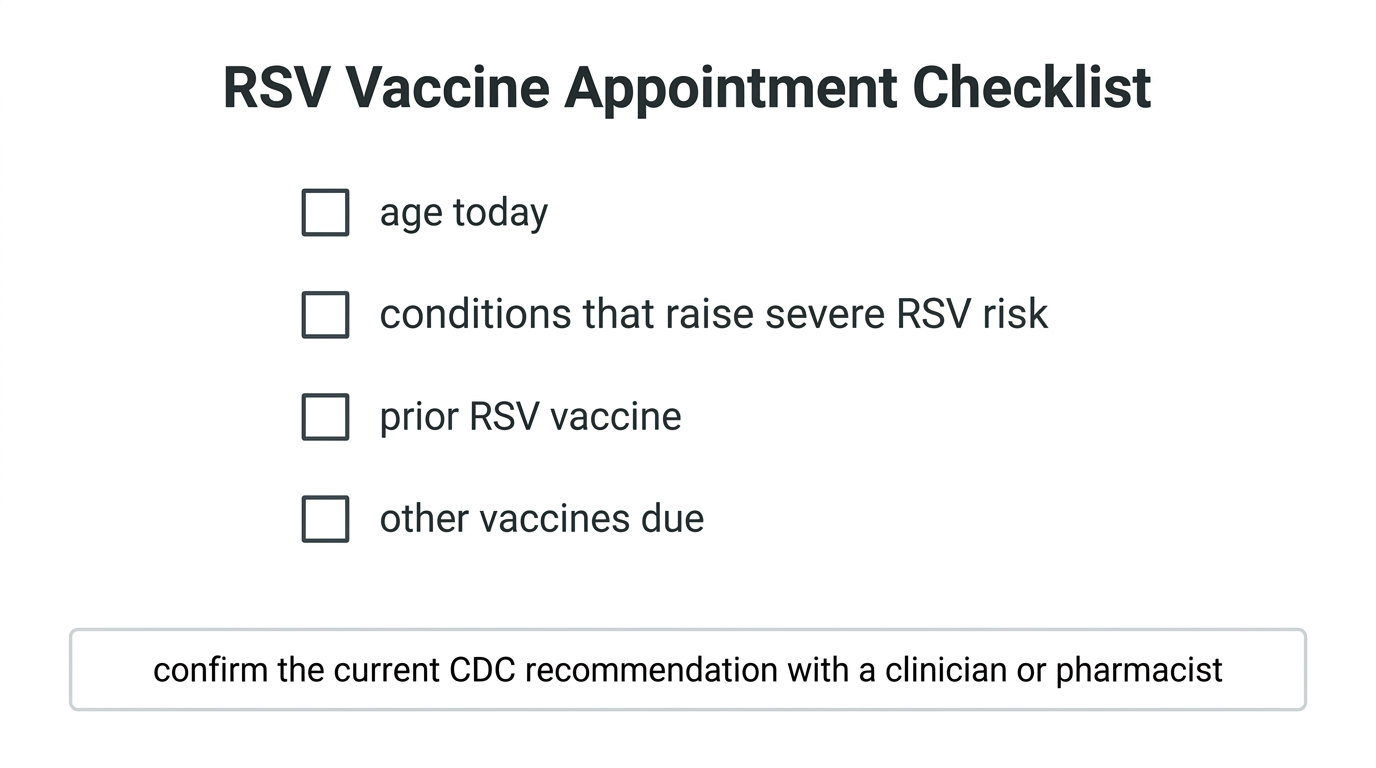
Confirm age, whether an RSV vaccine has already been received, and any diagnoses or treatments relevant to severe RSV risk. Ask the provider to check the current CDC guidance if the situation is uncertain. The immune-system aging guide gives context on why infection risk changes with age, while the return on prevention analysis explains how prevention decisions fit a longer planning horizon.
Sources
This article is educational and does not provide medical advice or individual vaccination recommendations.