Oral Health as Systemic Risk: Gums, Inflammation, and Aging
Bleeding gums can be easy to dismiss when they do not hurt. Persistent bleeding can signal inflammation around a tooth, and untreated periodontitis can damage the bone that holds teeth in place. The immediate costs are clear: pain, infection, lost teeth, and more difficult eating. Researchers also find links between gum disease and conditions elsewhere in the body. Those links deserve attention without turning every dental problem into a proven cause of accelerated aging.
The National Institute of Dental and Craniofacial Research describes dental plaque as a bacterial film. When plaque and tartar persist along the gum line, the resulting inflammatory response can injure the supporting tissue. Gingivitis can improve with daily care and professional cleaning. Periodontitis involves deeper tissue damage and needs dental evaluation and treatment. Age increases exposure and the prevalence of risk factors, but gum disease is not an unavoidable consequence of getting older.
Where the systemic signal begins
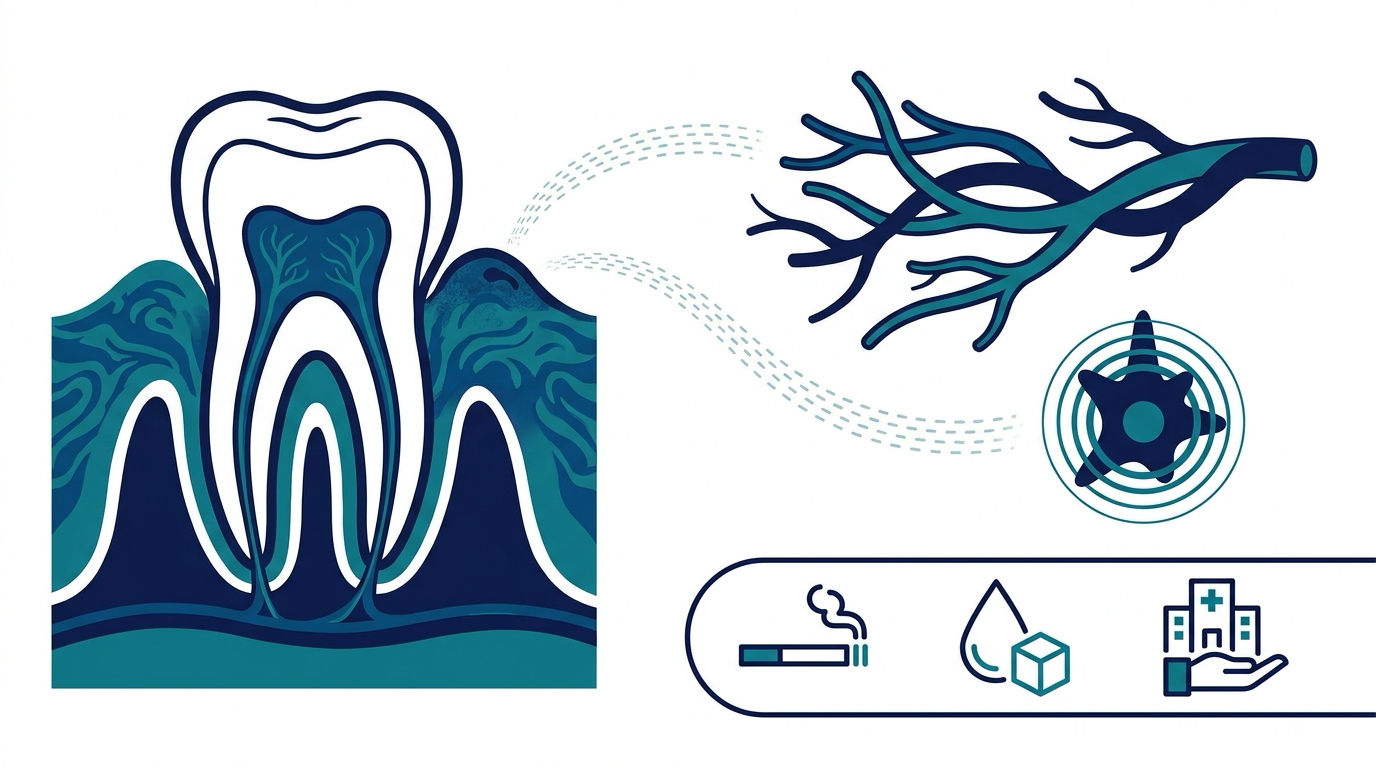
Inflamed periodontal tissue can expose the circulation to oral bacteria and inflammatory products. This is a biologically plausible route to effects beyond the mouth. Shared causes complicate the evidence: smoking, diabetes, access to care, diet, and socioeconomic conditions can affect oral and cardiovascular health at the same time. An association can reflect several pathways, including disease in the body making oral infection harder to control.
The American Heart Association's 2026 scientific statement reviews the association between periodontitis and atherosclerotic cardiovascular disease, including studies of inflammatory markers and vascular function. It describes plausible bacterial and inflammatory mechanisms while identifying gaps in causal and intervention evidence. The finding does not justify promising fewer heart attacks after periodontal treatment. Blood pressure, lipids, tobacco exposure, diabetes, and other established risk factors still require direct management.
Diabetes creates a two-way clinical problem
The link with diabetes has a practical direction in both ways. NIDCR reports that people with diabetes have a higher chance of periodontal disease, while poor glucose control can worsen oral infection and healing. Gum disease may, in turn, make blood sugar harder to control. A person managing diabetes should tell the dental team about the condition and tell the medical team about recurrent gum infection or delayed healing.
That coordination does not mean periodontal treatment replaces glucose treatment. Trials differ in design and outcome, and changes in a blood marker do not automatically establish a reduction in complications. The defensible action is to treat active oral disease, monitor glucose through established care, and remove avoidable barriers between dental and medical records.
What aging adds to the equation
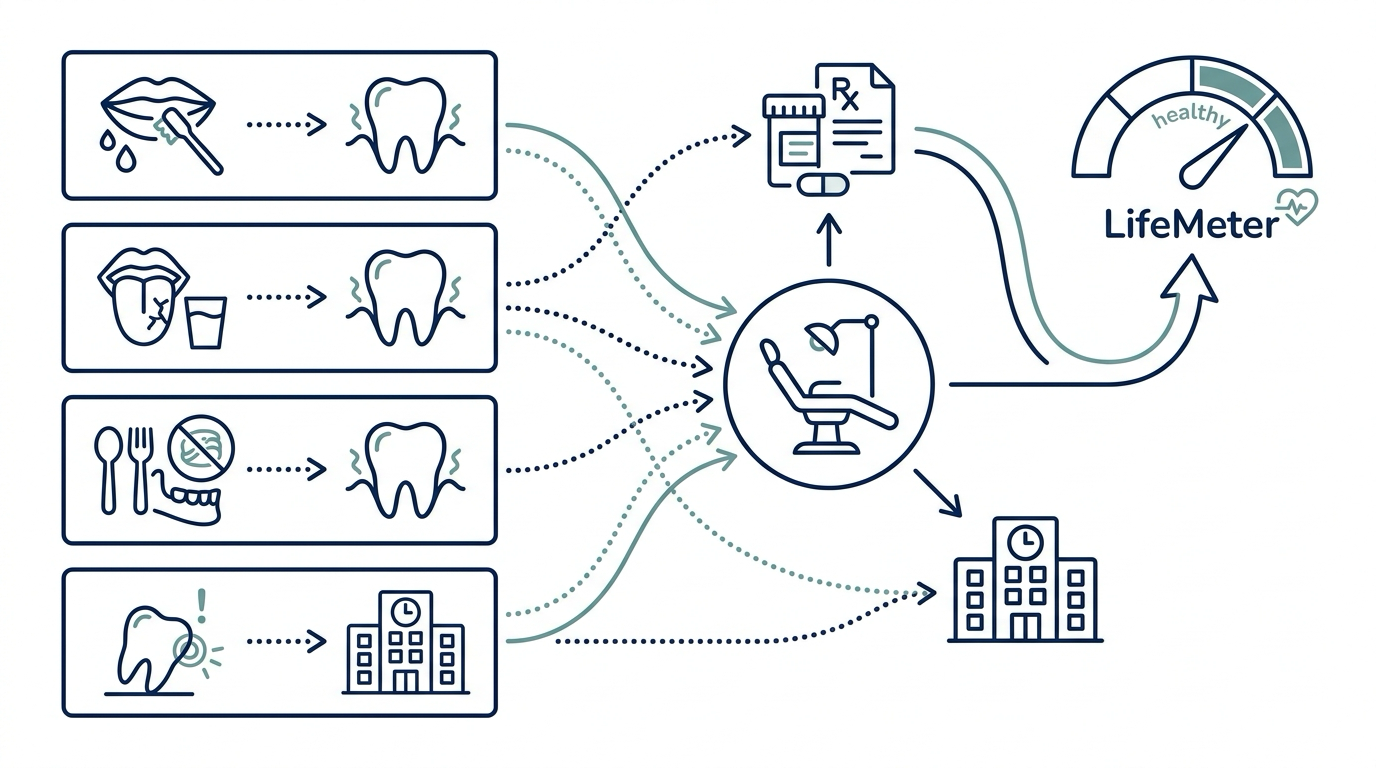
Oral health can constrain function even when a systemic mechanism remains unsettled. Loose or missing teeth, painful chewing, and poorly fitting dentures may narrow food choices. A person who avoids vegetables, nuts, or protein foods because chewing hurts faces a practical nutrition problem. Dry mouth, common with some medicines and medical conditions, can increase decay risk and make speaking or swallowing uncomfortable. These pathways deserve attention because they affect daily capacity directly.
The National Institute on Aging also summarizes observational links between gum disease, tooth loss, and later cognitive impairment. Those studies cannot show that periodontal treatment prevents dementia. Poor oral health may contribute through inflammation or reduced nutrition; cognitive decline may also make oral care harder, while shared exposures can influence both outcomes. The direction and size of any causal effect remain unresolved.
Oral care can become more difficult when arthritis limits hand movement, a person relies on caregivers, or routine dental visits are unaffordable. These constraints explain why a simple instruction to brush more carefully can miss the actual problem. A useful care plan asks whether the person can clean between teeth, whether medication causes dry mouth, whether dentures fit, and whether periodontal treatment is accessible.
Act on the condition that can be measured
Bleeding when brushing, swollen gums, persistent bad breath, gum recession, tooth mobility, and painful chewing warrant a dental evaluation. A dentist can assess gum pockets, attachment loss, and bone support, then explain whether routine cleaning or periodontal treatment is needed. Sudden swelling, spreading infection, fever, or severe pain calls for prompt clinical care. People with diabetes or medications that cause dry mouth should bring those details to the appointment.
Daily prevention remains specific: brush twice with fluoride toothpaste, clean between teeth, avoid tobacco, and obtain dental follow-up matched to personal risk. NIDCR notes that plaque can harden into tartar that requires professional removal. For someone with limited dexterity, an electric brush, adapted grip, or caregiver support may make the routine possible. The test of a plan is whether it controls disease over time, not whether it carries a longevity label.
Oral health belongs in an aging assessment because infection, pain, tooth loss, and impaired eating can erode function now. The broader inflammatory pathways are plausible and under study. Until intervention research establishes specific systemic outcomes, the sound clinical target is to identify and treat oral disease while continuing established care for cardiovascular and metabolic risk.
Sources
NIDCR, Periodontal (Gum) Disease.
NIDCR, Diabetes and Oral Health.
National Institute on Aging, Taking Care of Your Teeth and Mouth.
American Heart Association, 2026 scientific statement on periodontitis and cardiovascular disease.
This article provides general education. A dentist or clinician must assess individual symptoms, medical conditions, and treatment choices.